Home / Red or pink eye
Why is my eye red?
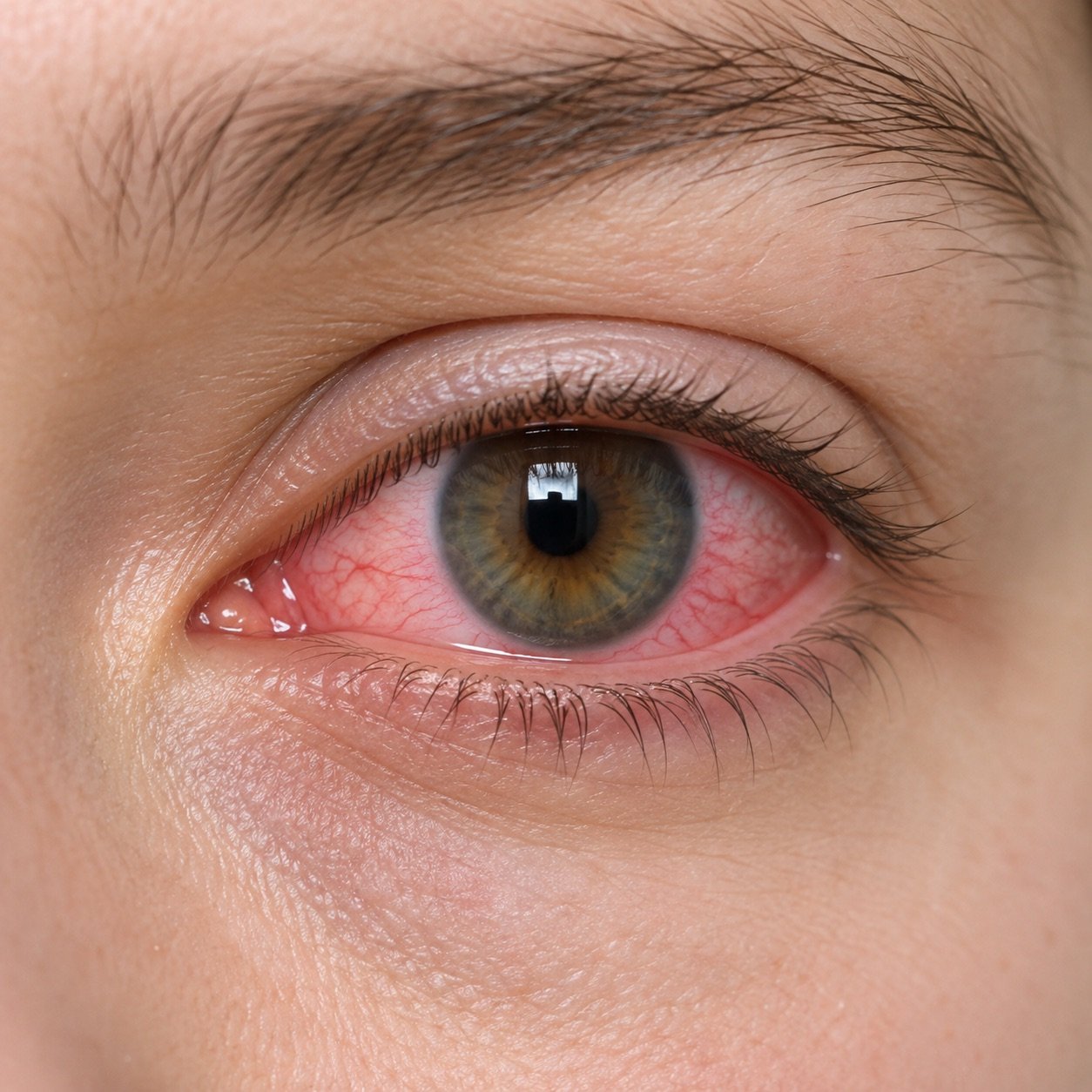
“Pink eye” is a description, not a diagnosis. At least eight different conditions produce a red eye, and the treatment for one is useless — occasionally harmful — for another.
Written and medically reviewed by Dr. Loi Thanh Mai, O.D.
Doctor of Optometry · Certified in the treatment and management of ocular disease · Last reviewed September 2026
Get seen today if any of these apply
Significant pain rather than irritation, sensitivity to light, any drop in vision, a red eye in someone who wears contact lenses, or redness following an injury or chemical splash. Call 714-542-2226, and go to an emergency room if we are closed.
Eight things that turn an eye red
Redness is just dilated blood vessels on the surface. What matters is why they dilated.
Viral conjunctivitis
The most common cause of true pink eye, and the reason antibiotic drops so often do nothing. Watery discharge, often alongside a cold. Extremely contagious, resolves on its own over one to three weeks.
Bacterial conjunctivitis
Thicker, yellow or green discharge, often with lids stuck together in the morning. This one does respond to antibiotic drops, which is exactly why distinguishing the two matters.
Allergic conjunctivitis
Both eyes, itching as the dominant symptom rather than grittiness, often seasonal. Antihistamine drops help; antibiotics do nothing at all.
Dry eye
Chronic low-grade redness, worse at the end of the day and after screen work. Frequently misdiagnosed as recurrent infection and treated with drops that never quite fix it.
Blepharitis
Inflammation along the lid margin, with crusting at the lash bases and redness that keeps coming back. Managed with lid hygiene rather than cured.
Subconjunctival hemorrhage
A single vivid red patch of blood on the white of the eye, painless, with normal vision. Looks alarming and is usually harmless. Clears in one to two weeks.
Iritis
Inflammation inside the eye. Deep aching pain, marked light sensitivity, redness concentrated in a ring around the cornea. Needs prescription treatment and follow-up.
Contact lens keratitis
A red, painful eye in a contact lens wearer is treated as a corneal infection until proven otherwise. Ulcers can scar and affect vision within days. Take the lenses out and be seen the same day.
When a red eye is more than irritation
Most red eyes are something minor that settles on its own. What matters is separating those from the few that can damage vision if they are left alone, and the signs below are where that line falls.
- Pain rather than irritation, or pain that is getting worse
- Any change in vision, however slight
- Marked sensitivity to light
- You wear contact lenses — take them out and be seen the same day
- Thick discharge that keeps the lids stuck together
- Redness that has not improved after a week
- Redness that keeps returning after treatment

Questions patients ask
Viral conjunctivitis is highly contagious for roughly one to two weeks. Bacterial is contagious until around 24 hours after antibiotic drops start. Allergic is not contagious at all.
Viral typically peaks at three to five days and clears over one to three weeks without treatment. Bacterial usually improves within a couple of days of the right drops.
Most schools require children to stay home until symptoms settle or, for bacterial cases, until 24 hours on drops. Viral spreads readily on hands and surfaces.
Cool compresses, preservative-free lubricating drops, scrupulous hand washing, and no contact lenses or eye makeup until it clears. Avoid redness-relief drops entirely.
Recurrent redness is rarely recurrent infection. It is far more often chronic dry eye, blepharitis or an allergy that has never been properly identified.
Red eye that is not settling?
Call and describe it. We will tell you whether it needs to be seen today, this week, or not at all.