Comprehensive eye exams
Your annual eye exam isn’t just about seeing clearly today. It’s about catching subtle changes early, protecting your long-term eye health, and making sure nothing important is developing out of sight.
Written and medically reviewed by Dr. Loi Thanh Mai, O.D.
Doctor of Optometry · Certified in the treatment and management of ocular disease · Last reviewed September 2026

Six things we check, every time
A full exam is really six separate examinations that happen to take place in one chair. Any one of them can turn up something the others would miss.
- Refraction — the precise lens power that gives you your sharpest vision, at distance and up close
- Binocular function — whether your eyes point at the same place and hold focus together
- Intraocular pressure — the main modifiable risk factor in glaucoma, and it causes no symptoms
- Anterior segment — cornea, lids, lashes and tear film under slit lamp magnification
- Retina and optic nerve — the only place in the body where blood vessels can be viewed directly
- History and context — your medication, work, screens, family history, and what you have noticed
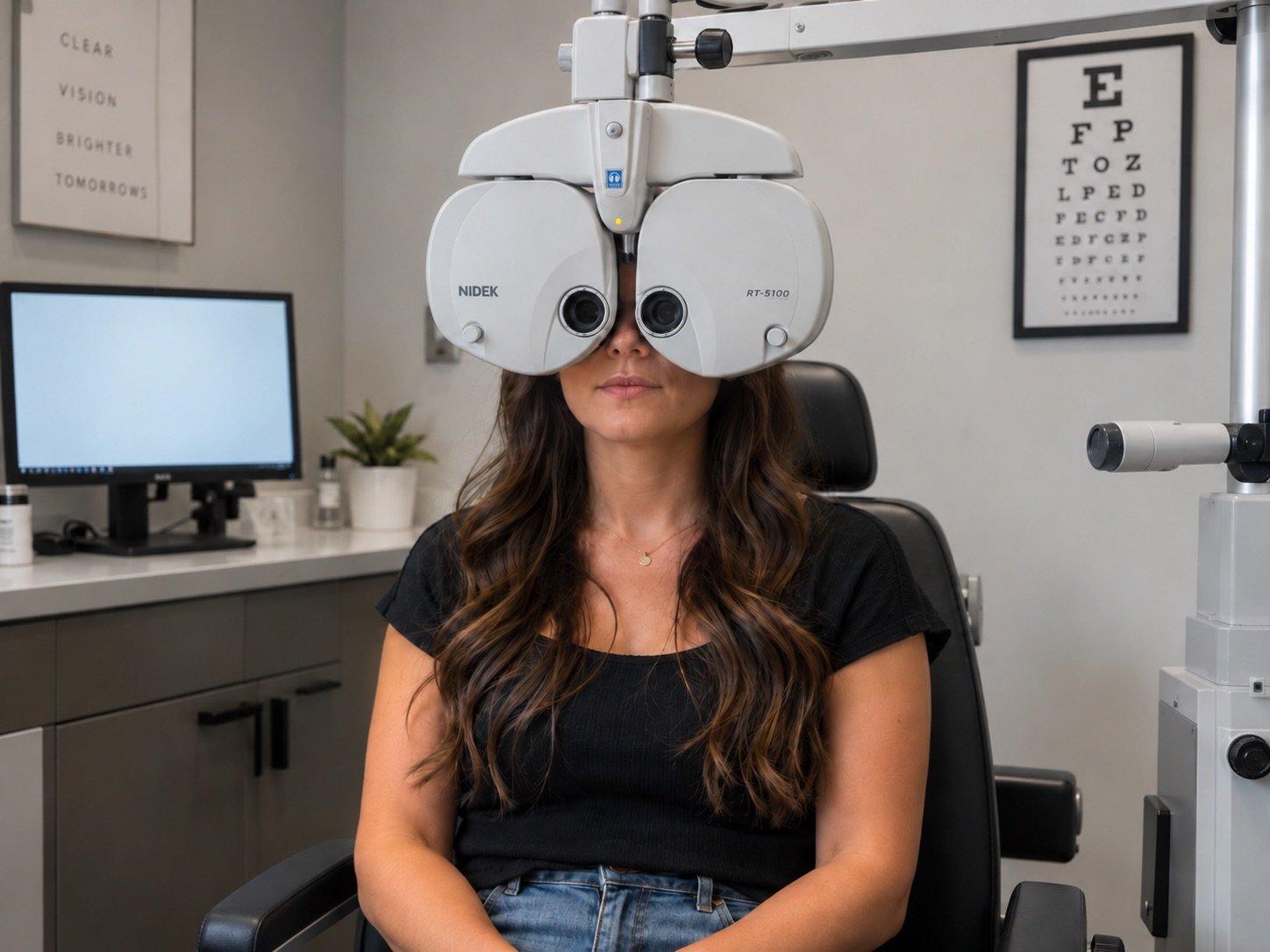
Your eyes can reveal more than changes in vision
A comprehensive eye exam evaluates more than your prescription. The retina, optic nerve, and blood vessels inside the eye can show early signs of conditions that may develop before you notice symptoms.
Diabetes can affect the retina before vision changes
Diabetes can damage the small blood vessels in the retina over time. Regular diabetic eye exams help detect these changes early, when treatment and monitoring can be most effective.
High blood pressure can leave visible changes in the eye
The retinal blood vessels can show changes associated with hypertension, including narrowing or damage to the vessel walls. These findings may prompt further evaluation with your primary care physician.
Glaucoma can progress without obvious symptoms
Glaucoma often develops gradually and can cause permanent peripheral vision loss before it is noticed. Evaluating eye pressure, the optic nerve, and other risk factors helps identify glaucoma earlier.
Questions patients ask
About an hour. Roughly ten minutes of that is pre-testing, the bulk is your time with Dr. Mai, and the rest is going through what he found.
Once a year for most adults. Sooner if you wear contact lenses, have diabetes, are being watched for glaucoma, or you have noticed something different about your vision.
Dilation is used whenever a clear view of the retina matters. It leaves you light-sensitive and blurry for close work for roughly four to six hours. Most people drive home fine, but bring sunglasses.
Your current glasses, contact lens boxes or prescription, your insurance or Medi-Cal card, and a list of any medication you take.
Yes. Federal rule requires we give you your glasses prescription after the exam, and we do, no questions asked.
You hear about it the same day, in plain terms. Most findings are managed here. If something needs a specialist, Dr. Mai makes that referral himself.
Due for an exam?
Book online, or call if you would rather talk through what you need first.