Home / Stye or eyelid bump
Styes and eyelid bumps
A tender, red eyelid bump is often a stye and may improve with time and warm compresses. A firm, painless lump that persists for weeks may be a different condition and should be evaluated.
Written and medically reviewed by Dr. Loi Thanh Mai, O.D.
Doctor of Optometry · Certified in the treatment and management of ocular disease · Last reviewed September 2026
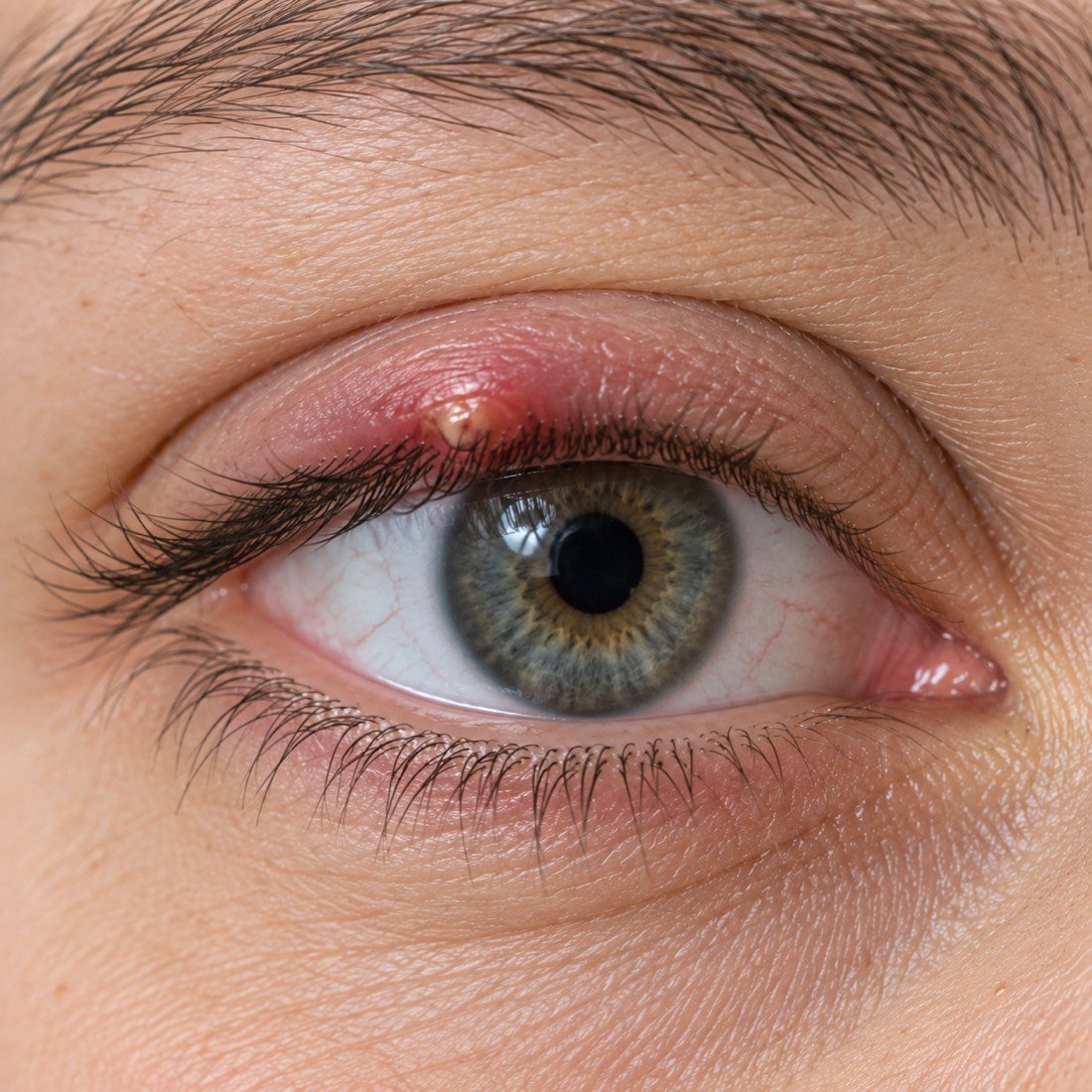
When an eyelid lump is urgent
If the redness and swelling spread beyond the eyelid onto the cheek or brow, if the eye itself becomes painful to move, if vision changes, or if you develop a fever, that can indicate the infection has spread into the tissue around the eye. That is a same-day problem — call 714-542-2226 or attend an emergency department if we are closed.
Not every eyelid lump is a stye
Styes and chalazia can look similar at first, but they often develop differently. How the lump feels, where it appears, and how long it lasts can help determine what it is.
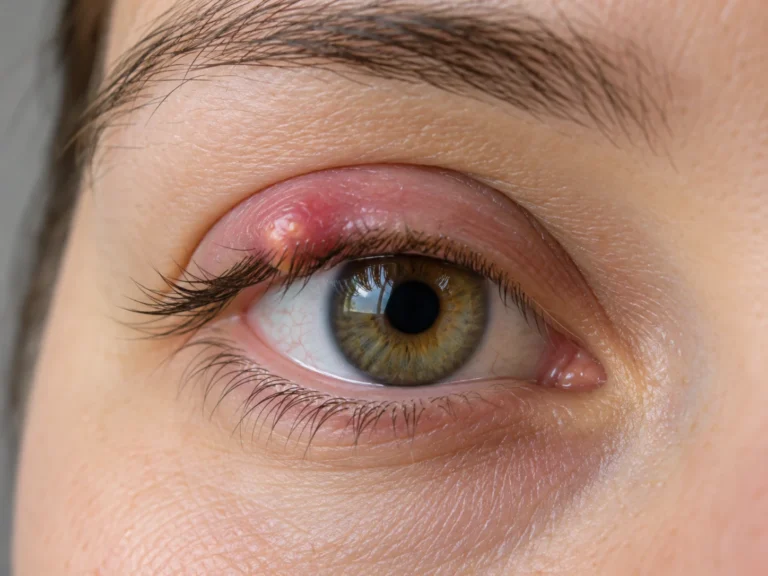
Red, tender, at the lash line — a stye
An infected gland at the lash line or within the lid. Red, distinctly tender, often with a visible white point. Most drain and settle within one to two weeks with warm compresses alone.
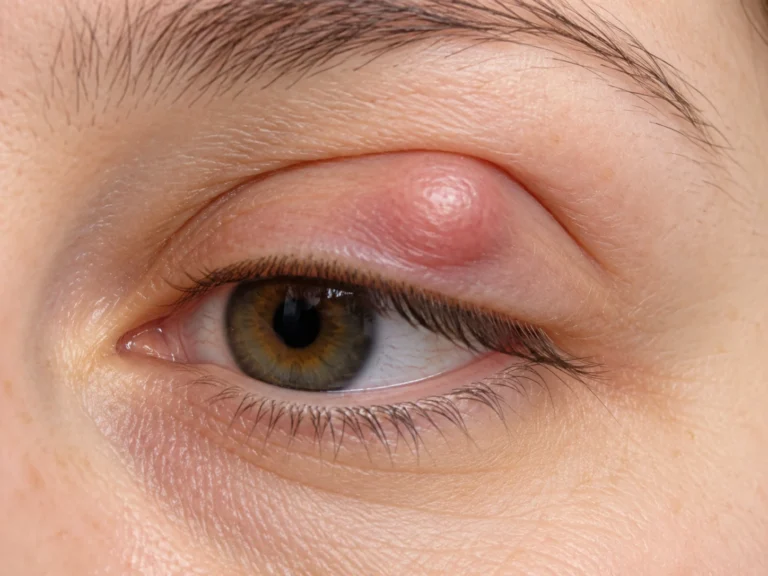
Firm, painless, further back in the lid — a chalazion
A blocked oil gland that has become a firm, rubbery lump in the body of the lid. Typically not painful once initial inflammation passes, and it can persist for months.
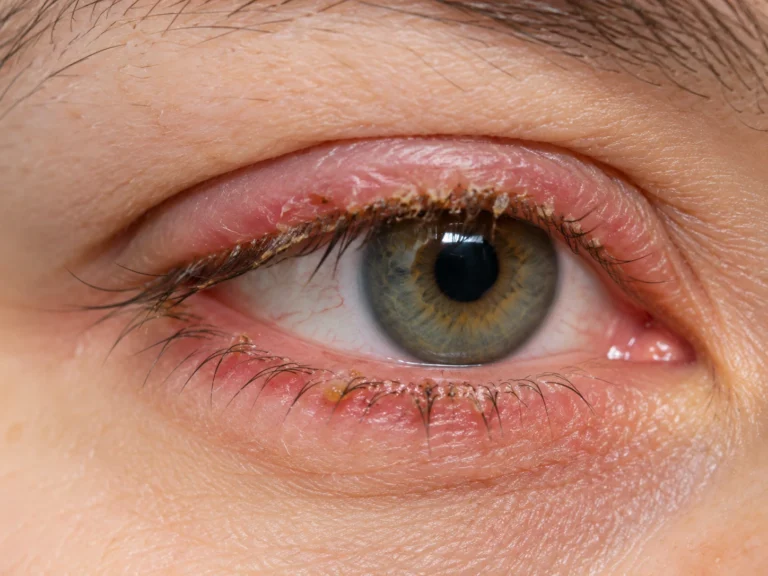
Crusting along the lash line — blepharitis
Chronic inflammation along the lid margin, with crusting at the lash bases and grittiness. Not a lump itself, but the underlying reason many people get styes repeatedly.
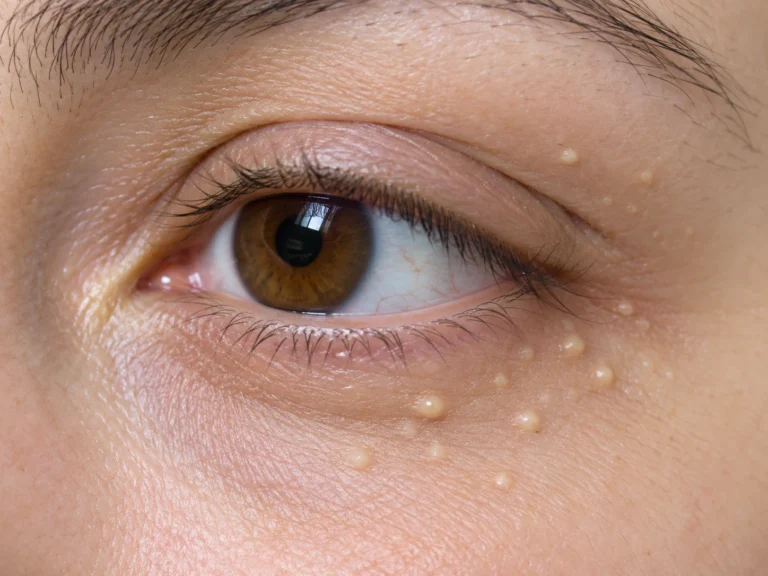
Small white bumps that do not hurt — milia
Small white or skin-colored bumps, painless and slow-growing. Harmless, though they can be removed if they are a nuisance.
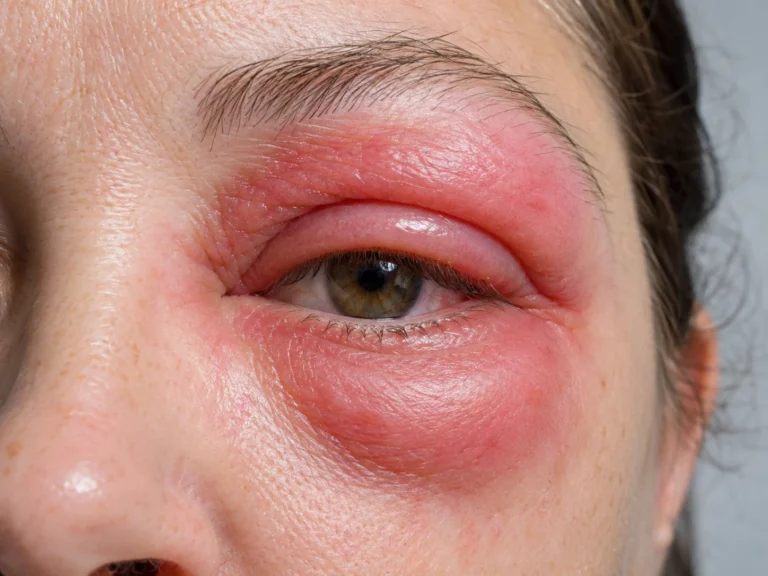
Spreading swelling rather than a lump — preseptal cellulitis
Infection spreading into the eyelid tissue itself: diffuse swelling and redness rather than a discrete lump, often with warmth and feeling unwell. Needs oral antibiotics promptly.
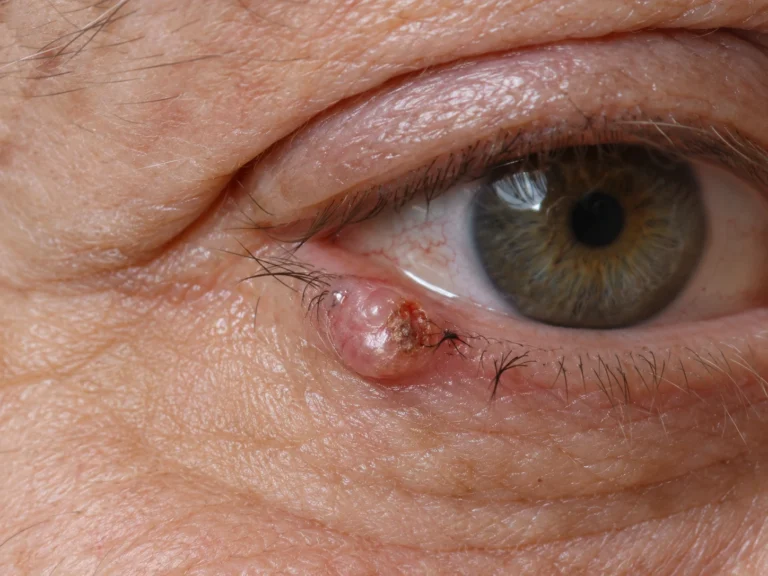
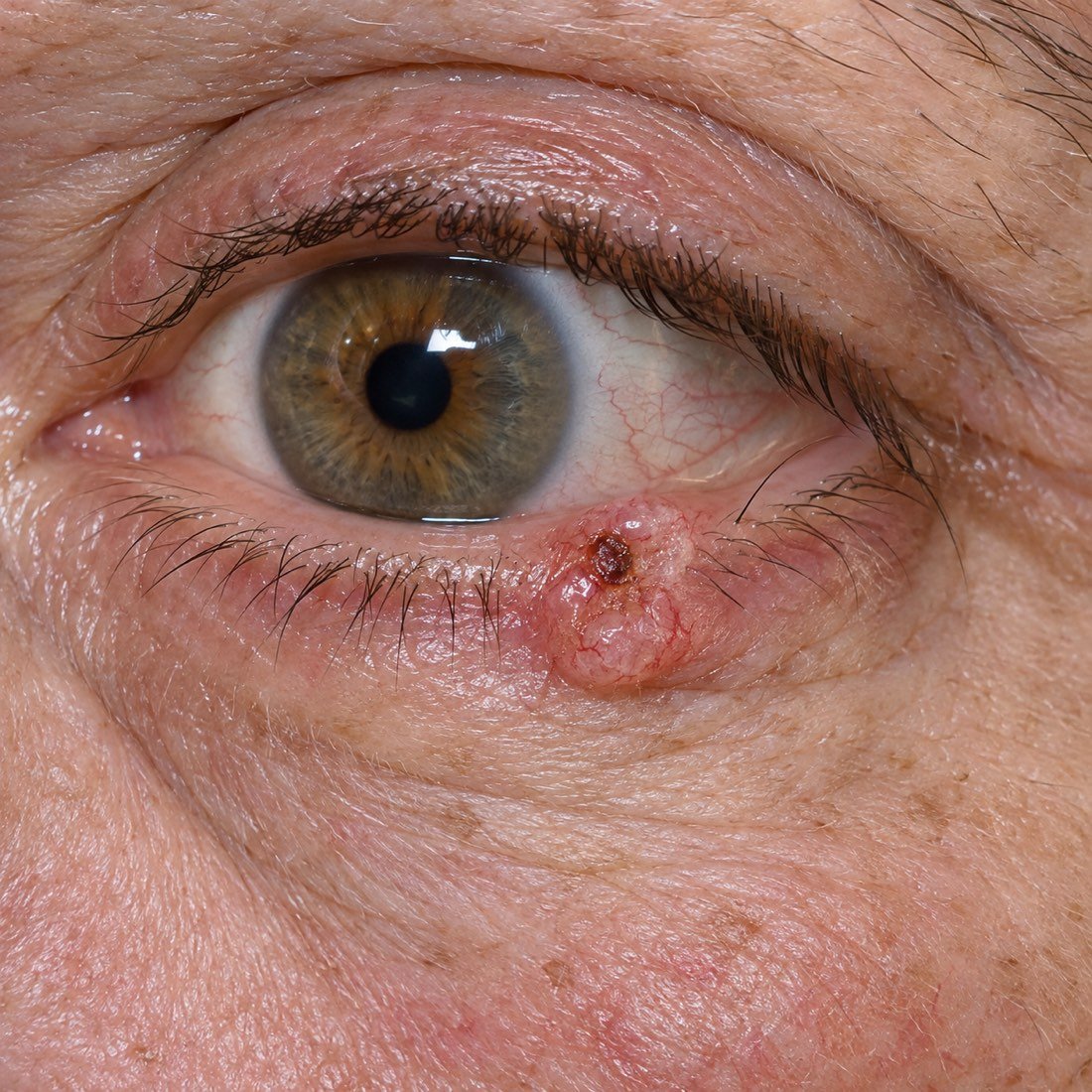
A lump that bleeds, changes or keeps returning — a lesion to examine
Uncommon, but a lump that bleeds, ulcerates, distorts the lid margin or keeps returning in the same spot should be examined properly rather than treated as another stye.
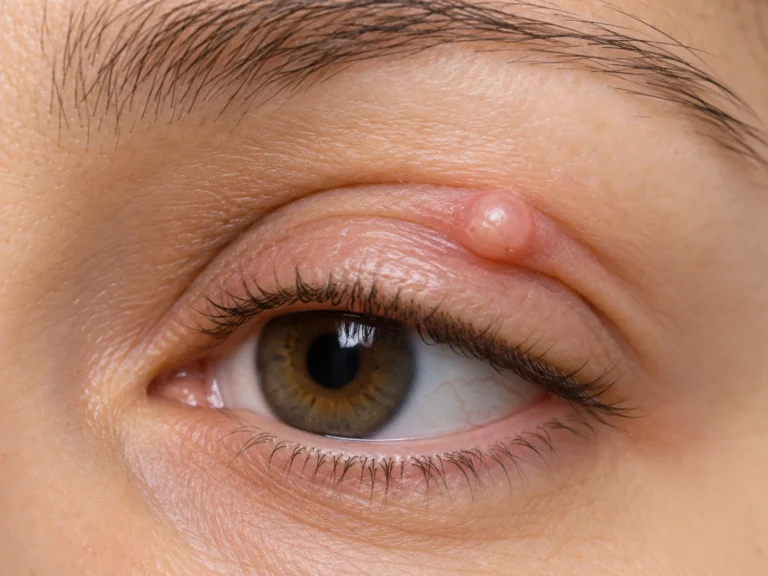
A clear bump like a tiny blister — a cyst
When to stop treating it at home
Most styes drain and settle within a week or two of proper warm compresses. The signs below point to something other than an ordinary stye, or to an infection spreading beyond the eyelid itself.
- A lump that has not improved after two weeks of proper warm compresses
- A firm painless lump that has been there over a month
- Redness or swelling spreading onto the cheek or brow
- Pain when moving the eye, or any change in vision
- A lump large enough to press on the eye and blur vision
- Styes that keep coming back — the underlying cause needs treating
- Any lump that bleeds, ulcerates or makes lashes fall out
Questions patients ask
Most settle within one to two weeks with consistent warm compresses. If it is still there at three weeks it has probably organized into a chalazion.
No. Squeezing forces infected material deeper into the eyelid tissue and risks turning a contained problem into a spreading one.
Usually not. A simple stye responds to heat and drainage rather than drops. Antibiotics are reserved for infection spreading into surrounding lid tissue.
Recurrent styes almost always point to underlying blepharitis or meibomian gland dysfunction. Treating that with a daily lid hygiene routine is what stops the cycle.
Not while it is active. Eye makeup blocks the very glands that are already struggling. Replace mascara and eyeliner after a stye.
It is treated either with a steroid injection or a small incision from the inside of the lid, under local anesthetic. Both are quick and effective.
Not much for identifying what it is — styes and chalazia occur on both. It matters more for what sits nearby. A lump on the lower lid margin can rub against the eye surface and cause watering or irritation, and one near the inner corner can interfere with tear drainage.
A painless white or skin-colored bump that has not changed in months is most often a chalazion that has settled into a firm lump, or a milium — a small keratin cyst. Neither is dangerous, but neither reliably clears on its own after that long. A lump present for months is worth examining rather than waiting out, particularly if it has changed shape, bled, or distorted the lid margin.
Lump on your eyelid?
If it has been there more than a couple of weeks, book a look rather than waiting it out further.