Scleral Contact Lenses in Santa Ana
Custom-fitted scleral lenses can provide clearer, more comfortable vision for patients with keratoconus, irregular corneas, corneal scarring, severe dry eye, or contact lenses that have never fit quite right.
Keratoconus · Irregular corneas · Corneal scarring · Severe dry eye
Written and medically reviewed by Dr. Loi Thanh Mai, O.D.
Doctor of Optometry · Certified in the treatment and management of ocular disease · Last reviewed September 2026
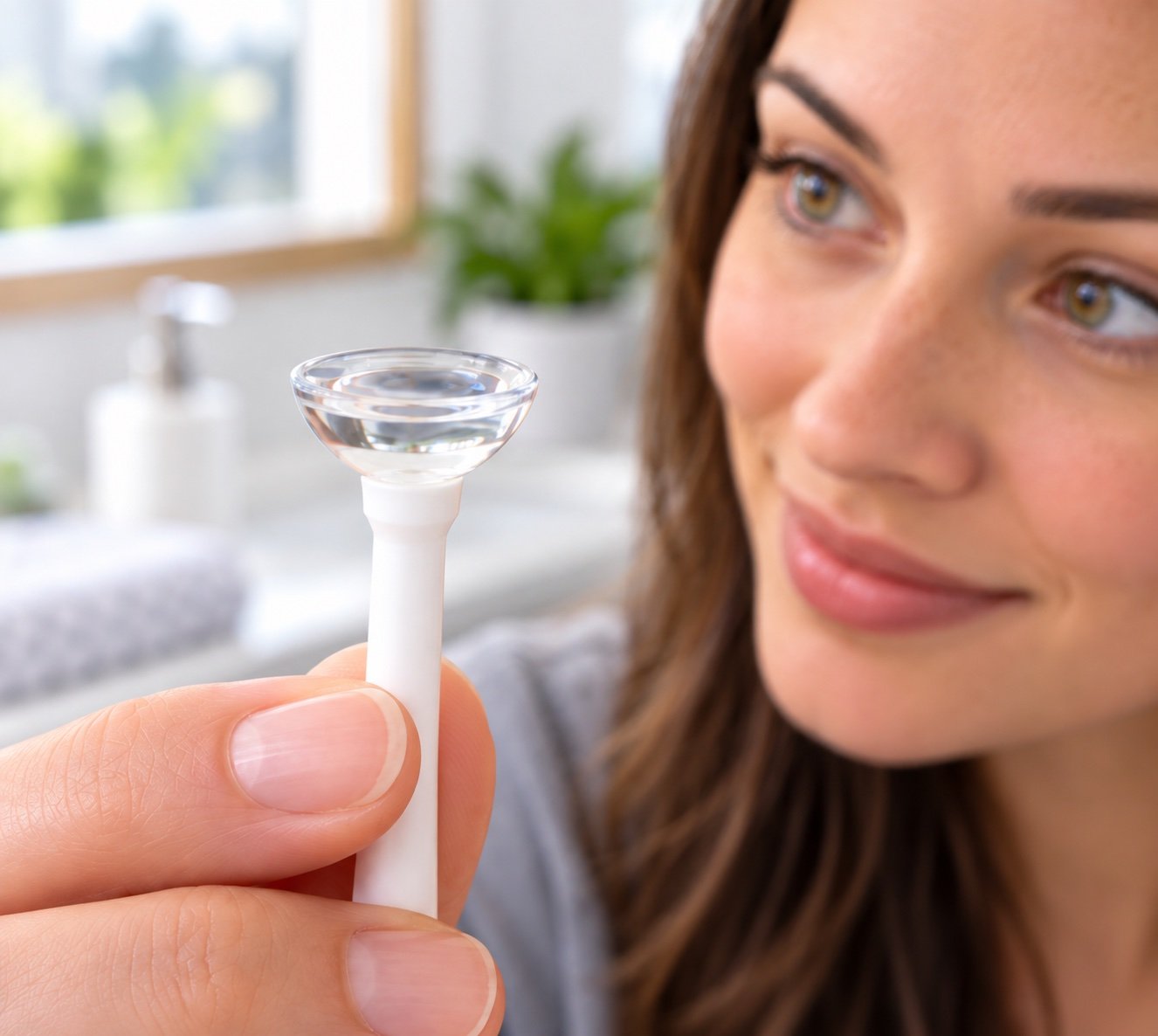
Specialized fittings require more than a prescription
Scleral lenses are highly customized. Their success depends on carefully evaluating the shape of the eye, selecting an appropriate lens design, and refining the fit through follow-up visits.
Personalized fitting
Each lens is selected and adjusted around the shape and needs of your eyes.
Complex corneal care
Options for keratoconus, irregular corneas, scarring, and other challenging fits.
Ongoing follow-up
Fit, comfort, vision, and corneal health are reassessed as your lenses are refined.
What makes a scleral lens different?
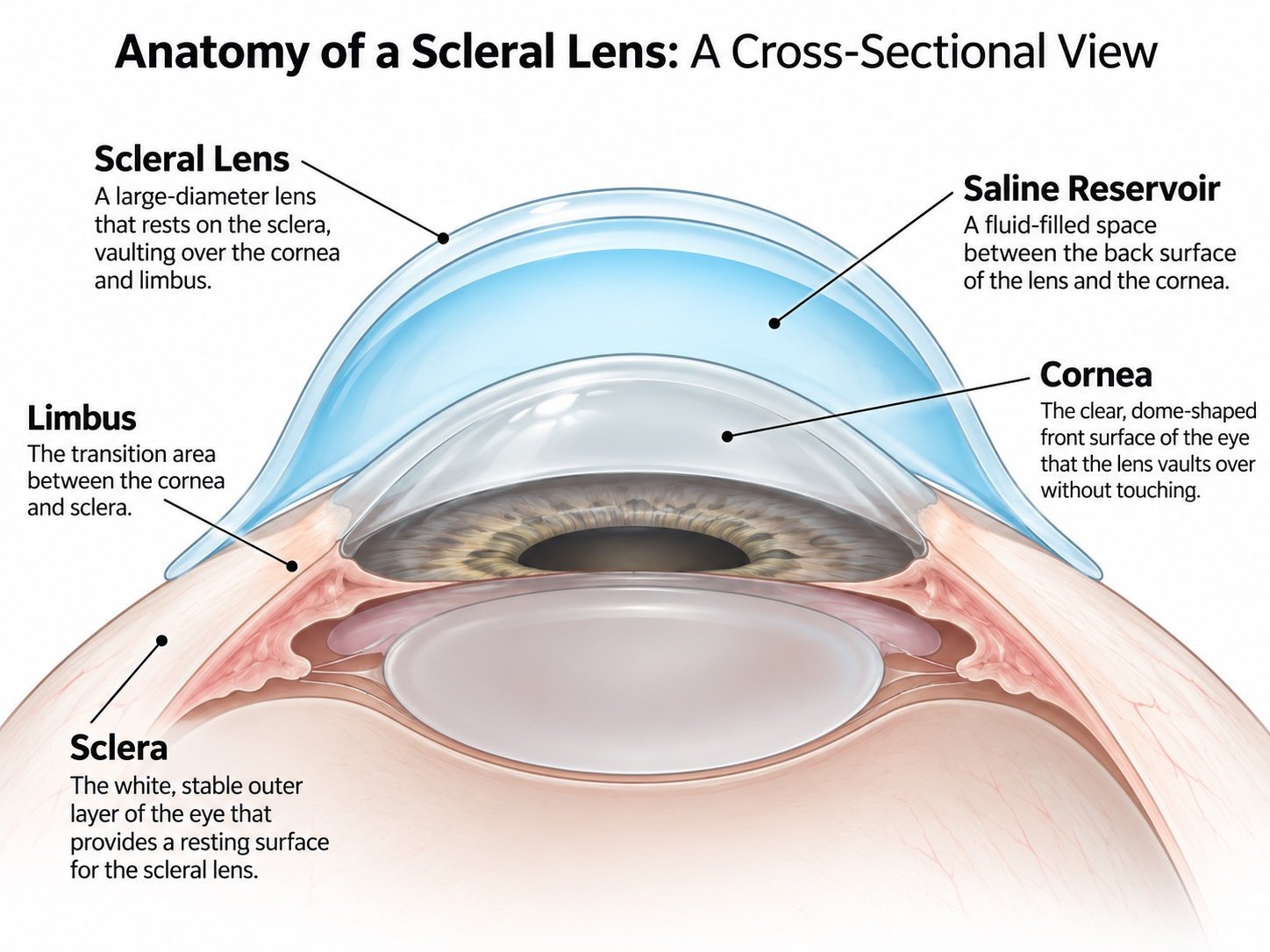
Scleral lenses are larger rigid contact lenses that rest on the white portion of the eye rather than directly on the cornea.
The lens vaults over the cornea, creating a fluid-filled reservoir between the lens and the eye. This can help provide a smoother optical surface while reducing direct contact with an irregular or sensitive cornea.
Scleral lenses can help when standard contacts are not enough
Keratoconus
When the cornea becomes irregular or cone-shaped, conventional glasses and soft contacts may no longer provide consistent vision.
Irregular corneas
Scleral lenses can create a smooth optical surface over corneas affected by irregular shape or previous disease.
Corneal scarring
Certain scars can distort the cornea and reduce the quality of vision even when the prescription itself is correct.
Severe dry eye
The fluid reservoir beneath the lens may provide relief and protection for selected patients with significant ocular surface disease.
Difficult contact lens fits
Patients who have struggled with unstable vision, poor comfort, or repeated contact lens failures may benefit from a more customized approach.
When glasses are no longer enough
As keratoconus progresses, the cornea becomes increasingly irregular. A standard glasses prescription may correct the power of the eye but cannot fully compensate for the distorted corneal surface.
A scleral lens creates a new, smooth optical surface over the irregular cornea, which can significantly improve the quality and stability of vision for many patients.
A different option for selected severe dry eye patients
For some patients with significant ocular surface disease, the fluid reservoir beneath a scleral lens can help protect the cornea and maintain a hydrated environment throughout the day.
Scleral lenses are not necessary for every dry eye patient, so the first step is determining the underlying cause and severity of the condition.
A scleral lens is fitted to your eye—not taken off a shelf
The fitting process is more involved than a standard soft contact lens exam because the lens must vault the cornea properly, align with the sclera, remain stable, and provide healthy clearance throughout wear.
01
Comprehensive evaluation
We review your prescription, corneal health, previous contact lens experience, visual goals, and the condition being treated.
02
Corneal & ocular surface assessment
The shape and health of the front of the eye are carefully evaluated to guide lens selection.
03
Trial lens fitting
A diagnostic scleral lens is placed on the eye so we can evaluate clearance, alignment, comfort, and vision.
04
Refinement & follow-up
The lens design may be adjusted through follow-up visits until vision, comfort, and corneal health are appropriately balanced.
The lens is only as good as the fit
Two scleral lenses with the same prescription can perform very differently depending on how they interact with the eye. Proper fitting helps determine:
That is why scleral fitting is a process, not a single measurement.
- Corneal clearance
- Lens stability on the eye
- Comfort through a full day of wear
- Oxygen delivery to the cornea
- Quality and stability of vision
- Scleral alignment and landing
- Long-term corneal health
The goal is more than seeing the eye chart
More stable vision
A smooth optical surface can reduce the visual distortion caused by an irregular cornea.
Improved comfort
Because the lens vaults the cornea, it may be more comfortable for selected patients who cannot tolerate conventional rigid lenses.
Better day-to-day function
The goal is vision that remains useful during the activities that actually matter—working, driving, reading, and daily life.
How scleral lenses differ from standard contact lenses
The differences in size and position are what make the fitting process different too.
| Soft contact lenses | Scleral lenses | |
|---|---|---|
| Size | Smaller | Larger |
| Where the lens rests | Mainly the cornea | The sclera |
| Vaults the cornea | No | Yes |
| Customization | Moderate | High |
| Irregular corneas | Limited | Often useful |
| Fluid reservoir | No | Yes |
| Fitting complexity | Routine | Advanced |
Specialty care without losing the personal care
One doctor throughout the process
Dr. Mai evaluates your eyes, performs the fitting, and follows your progress from the first visit through subsequent adjustments.
Fitting based on more than prescription
Vision, corneal shape, ocular surface health, comfort, wear time, and real-world performance all influence the final lens.
Follow-up is part of the fit
The lens is reassessed after you have worn it—not just when it first looks good in the exam chair.
Questions patients ask
Many patients find them comfortable because the lens rests primarily on the sclera rather than directly on the cornea. Comfort varies by patient and depends heavily on proper fitting.
Yes. Scleral lenses are commonly used to improve vision in patients with keratoconus by creating a smoother optical surface over the irregular cornea.
They can be helpful for selected patients with significant ocular surface disease, but they are not appropriate for every type of dry eye.
The process usually involves an initial evaluation followed by trial fitting and one or more follow-up visits to refine the fit and prescription.
Wear time depends on the health of the eye, the fit of the lens, the lens material, and individual tolerance.
They require a different insertion technique than soft contacts. We provide training and allow patients time to become comfortable with insertion and removal.
Coverage varies depending on the plan, diagnosis, and medical necessity. Our team can help you understand available benefits before treatment begins.
Typically not, although individual insurance requirements may vary.
Scleral lens fittings in Santa Ana
Luminous Optometry provides specialty contact lens care for patients in Santa Ana and the surrounding Orange County communities. We evaluate and fit scleral lenses for keratoconus, irregular corneas, corneal scarring, severe dry eye, and other challenging contact lens cases.
If you have been told that conventional contact lenses are not an option — or you have struggled with comfort or unstable vision — a scleral lens evaluation may provide another path forward.
Ready to find out whether scleral lenses are right for you?
A specialty contact lens evaluation is the first step toward determining whether scleral lenses may improve your vision or comfort.