Written and medically reviewed by Dr. Loi Thanh Mai, O.D.
Doctor of Optometry · Certified in the treatment and management of ocular disease · Last reviewed September 2026
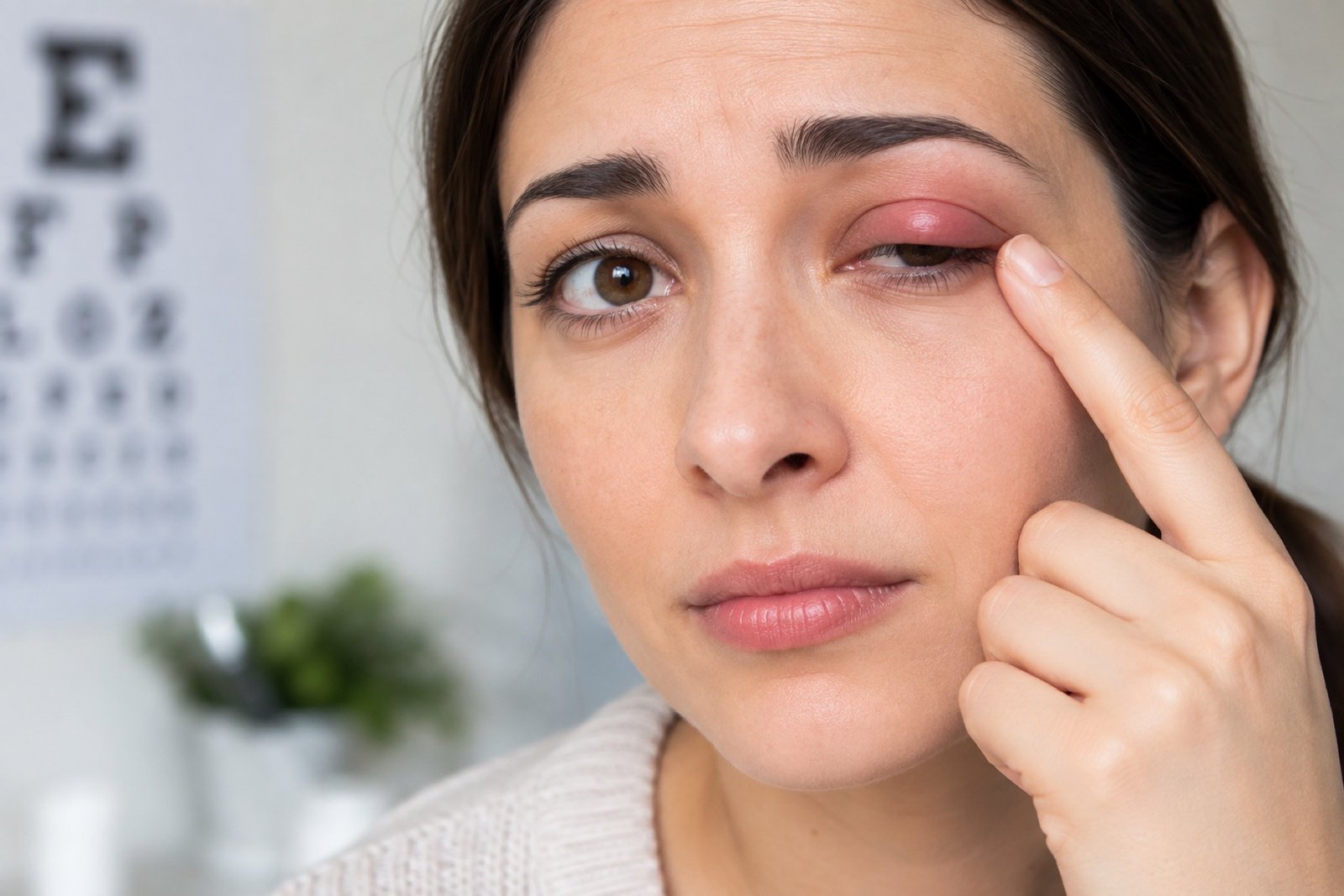
“Pink eye” is one of those phrases that sounds like a diagnosis and functions like a shrug. It describes a red eye. It does not say why the eye is red, and the why determines everything about what should be done.
The practical consequence is that a great many people are prescribed antibiotic drops for something antibiotics cannot touch.
The four common types
Viral conjunctivitis — the most common
Typically begins in one eye and moves to the other within a few days. The discharge is watery rather than thick. It often accompanies or follows a cold, and there may be a tender lymph node just in front of the ear. It is extremely contagious, which is why it travels through households and classrooms so efficiently.
It resolves on its own over one to three weeks. Antibiotic drops do nothing to it whatsoever. Comfort measures — cool compresses, preservative-free lubricating drops, rigorous hand washing — are the entire treatment.
Bacterial conjunctivitis
Thicker discharge, yellow or green, and the classic sign of lids genuinely stuck together in the morning. More common in children than adults. This type does respond to antibiotic drops, usually improving within a day or two of starting them.
The difficulty is that on day one, viral and bacterial can look similar. Distinguishing them properly is a slit lamp job, and it is the reason a ten-minute examination beats guessing.
Allergic conjunctivitis
Almost always both eyes at once, and itching is the dominant complaint rather than grittiness or soreness. Frequently seasonal, frequently alongside sneezing and a blocked nose. Antihistamine drops help considerably; antibiotics are irrelevant.
Dry eye pretending to be pink eye
This one is missed constantly. Chronic low-grade redness, worse at the end of the day and after screen work, sometimes with watering that seems to contradict the diagnosis entirely. It gets treated as recurrent infection, clears up slightly, and then comes back — because the underlying dry eye was never addressed.
If your “pink eye” keeps returning every few weeks, this is the most likely explanation.
The redness-relief trap. Drops marketed for getting the red out work by constricting the surface blood vessels. The eye looks white for a few hours and nothing has been treated. Used regularly they produce rebound redness, so the eye is worse between doses than it was originally.
The red eyes that are not conjunctivitis at all
Several more serious conditions present as a red eye, and they are the reason “wait and see” is not always safe advice.
- Iritis — inflammation inside the eye. Deep aching pain, marked light sensitivity, and redness concentrated in a ring around the cornea.
- Corneal ulcer — particularly in contact lens wearers. A red, painful eye in someone who wears lenses is treated as a corneal infection until proven otherwise.
- Angle-closure glaucoma — uncommon but an emergency. Severe pain, blurred vision, haloes around lights, often with nausea and vomiting.
- Subconjunctival hemorrhage — a vivid red patch of blood on the white of the eye, painless, vision normal. Looks dreadful, almost always harmless.
When to be seen rather than wait
Get a red eye examined promptly if there is genuine pain rather than irritation, any change in vision, marked light sensitivity, thick discharge that keeps recurring, or if you wear contact lenses. Take the lenses out and leave them out. If the eye was struck, or anything chemical splashed into it, that is an emergency — go straight to an emergency department.
Our page on red and pink eye covers the causes in more detail, and urgent eye care explains how same-week appointments work here.
What to do in the meantime
Cool compresses for comfort. Preservative-free lubricating drops. Wash your hands considerably more than feels necessary and do not share towels or pillowcases. No eye makeup and no contact lenses until it has cleared. And do not use someone else’s leftover prescription drops.
Book your appointment
Booking online takes under a minute. Prefer to talk it through first? Call and you will reach our front desk, not a phone tree.
We accept VSP, EyeMed and Medi-Cal, and offer a $119 a year membership for patients without vision coverage.