The lens matters more than the frame
Frames are the part everyone shops for. The lens is the part you actually look through for the next two years. Here is every choice you will be offered, what it genuinely does, and when it is not worth your money.
Written and medically reviewed by Dr. Loi Thanh Mai, O.D.
Doctor of Optometry · Certified in the treatment and management of ocular disease · Last reviewed September 2026
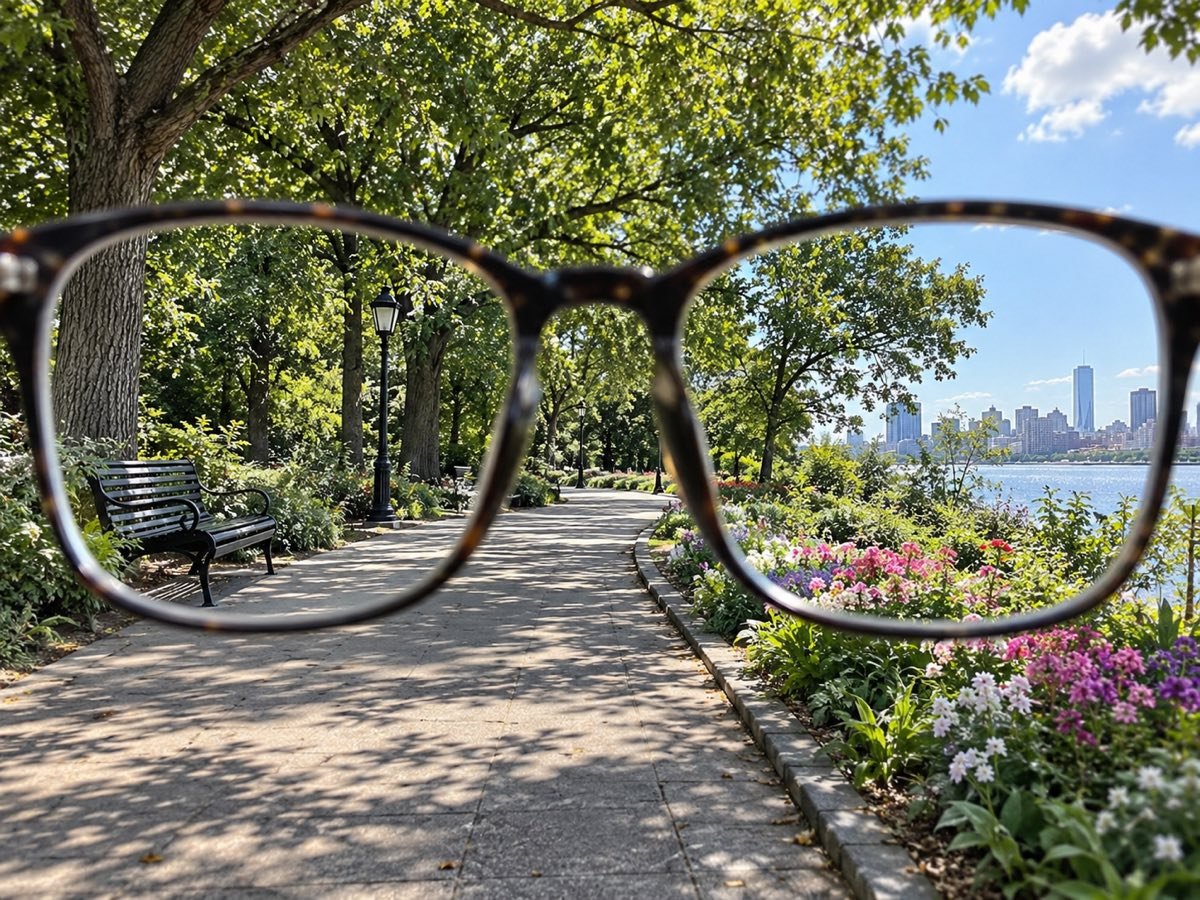
How many distances does one lens cover?
This is the first decision, and it is driven by your age and your prescription rather than by preference. After about 40, the eye’s focusing range shortens and a single power stops covering everything.
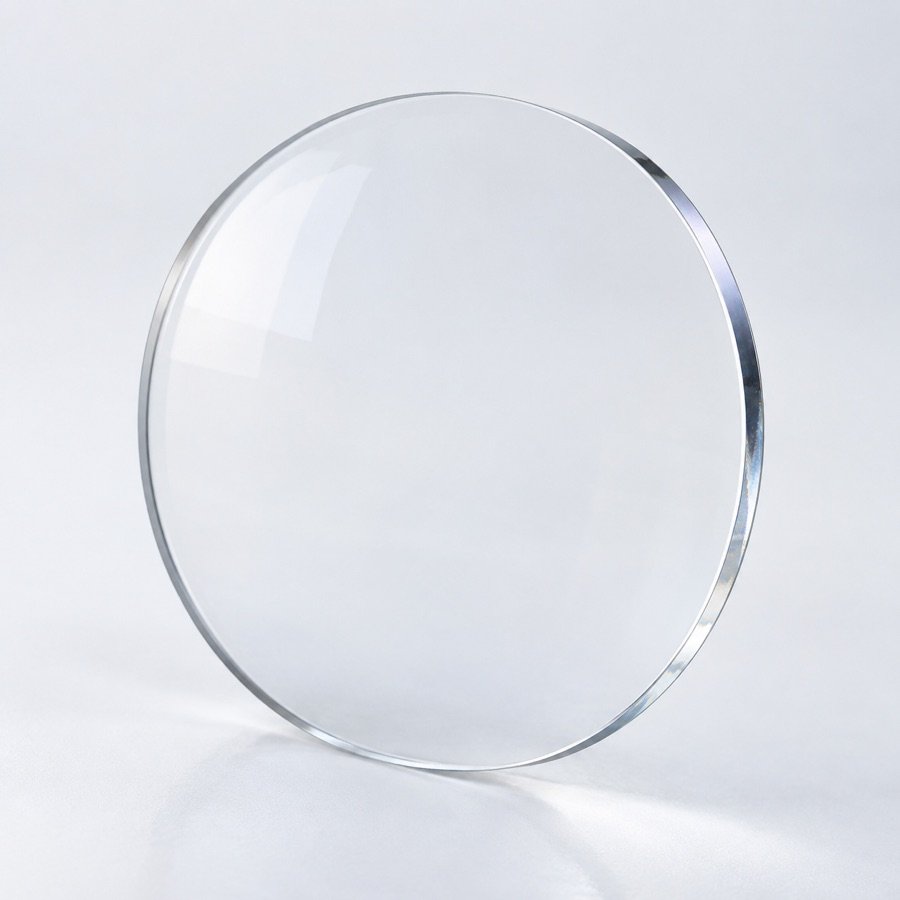
Single vision
One power across the whole lens, for distance only or reading only. The simplest design, the widest clear field, and the cheapest to make.
Best for anyone under about 40, or as a dedicated reading or computer pair.
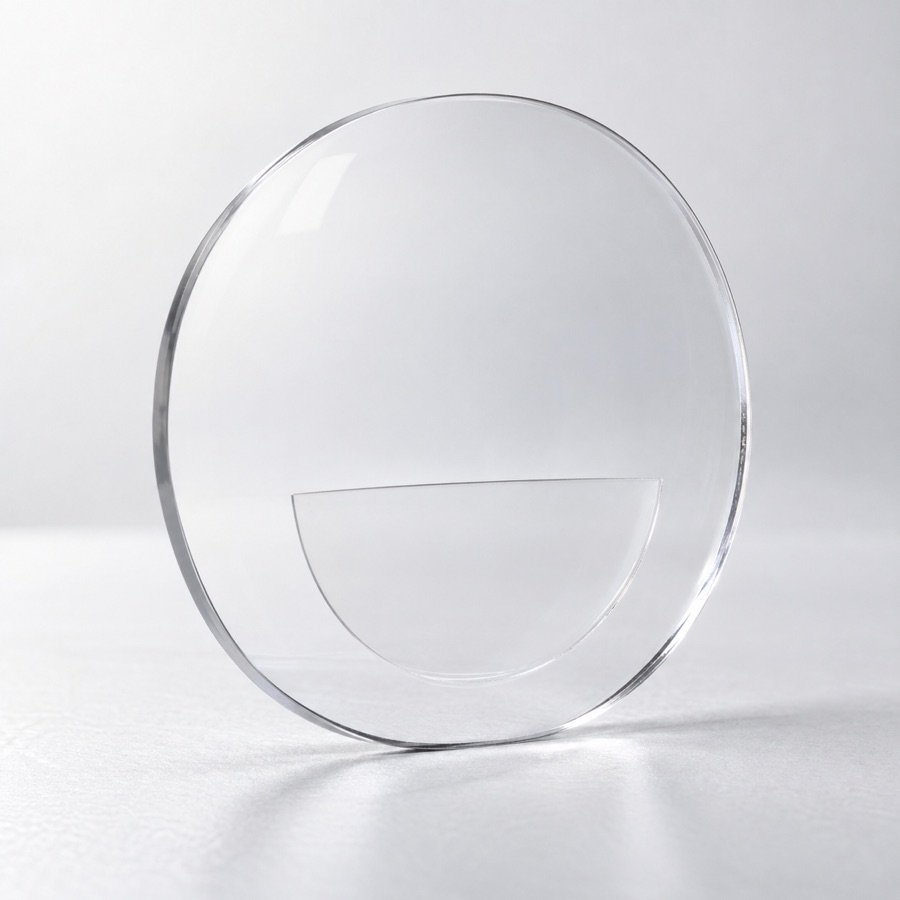
Bifocal
Distance up top, reading in a segment at the bottom, divided by a visible line. Your eye jumps between two powers with nothing in between.
Best for close work at a fixed distance, or if progressives have failed you before.
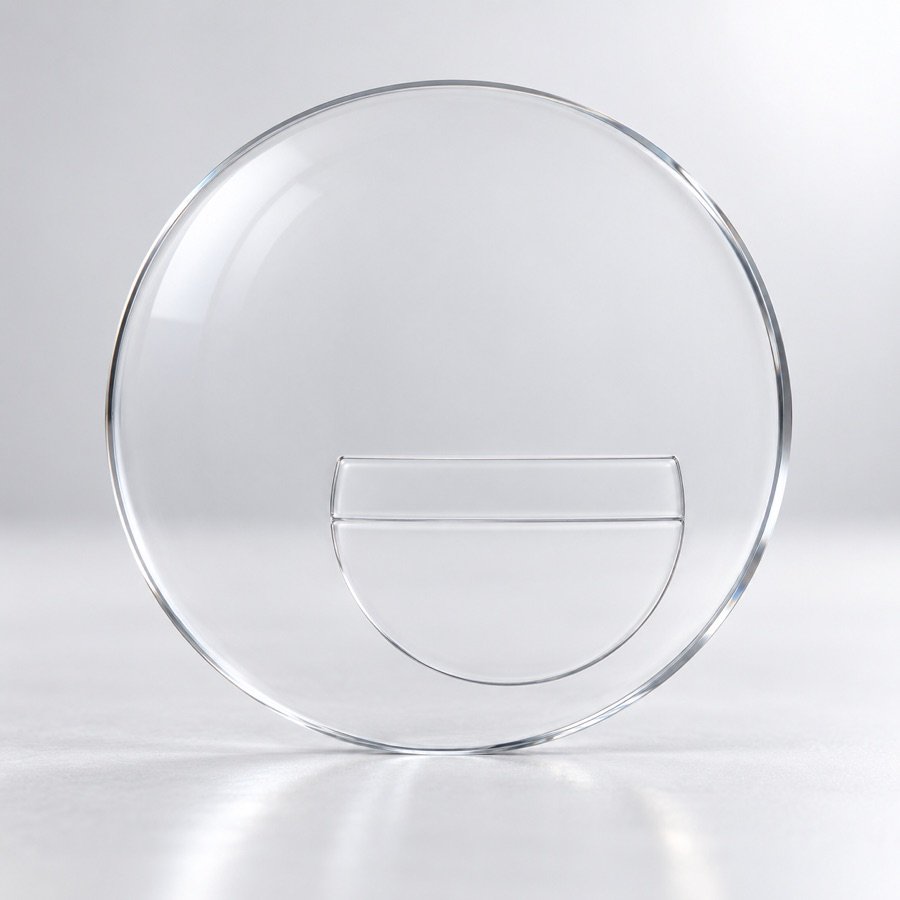
Trifocal
Adds a narrow intermediate strip between the two, for the arm’s-length range a bifocal skips. Two visible lines.
Best for desktop monitors and dashboards when a progressive is not wanted.
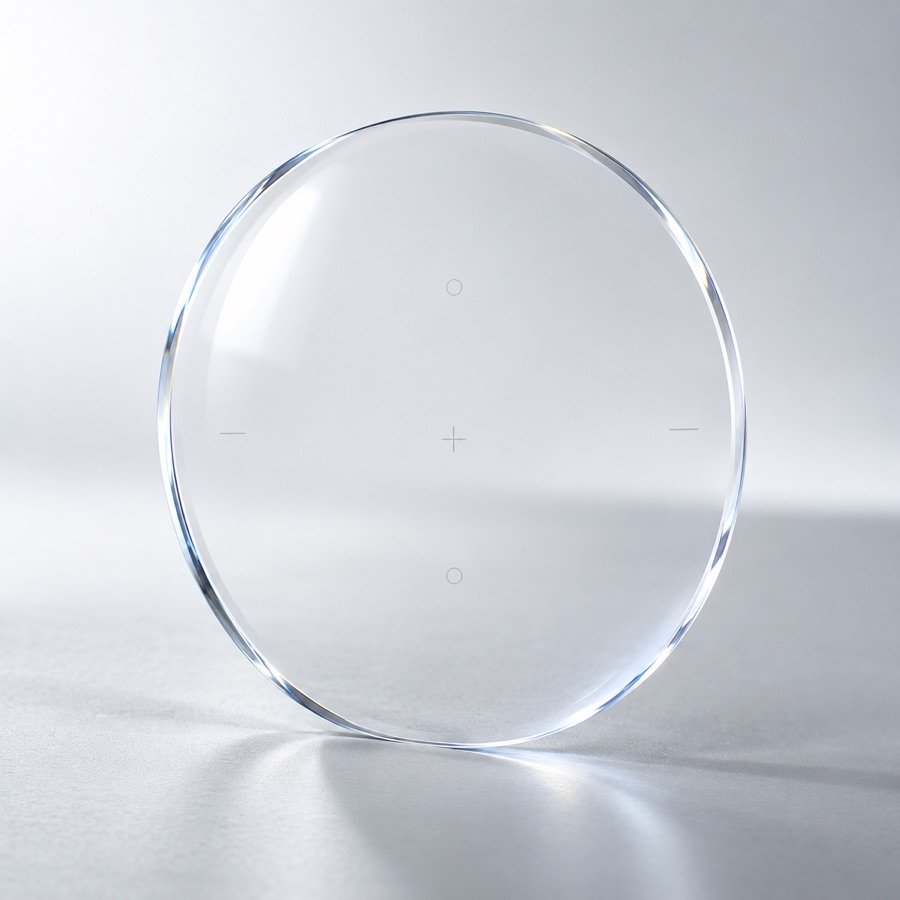
Progressive
Power changes gradually down the lens with no line and no jump, covering distance, intermediate and near. The sides of the corridor are softer, which is the trade-off for the seamless middle.
Best for most people over 40 who want one pair for everything.
What the lens is actually made of
Material decides three things: how thick the edge ends up, how well it survives being hit, and how sharp the optics stay toward the edge of the lens. Stronger prescriptions feel this choice most.
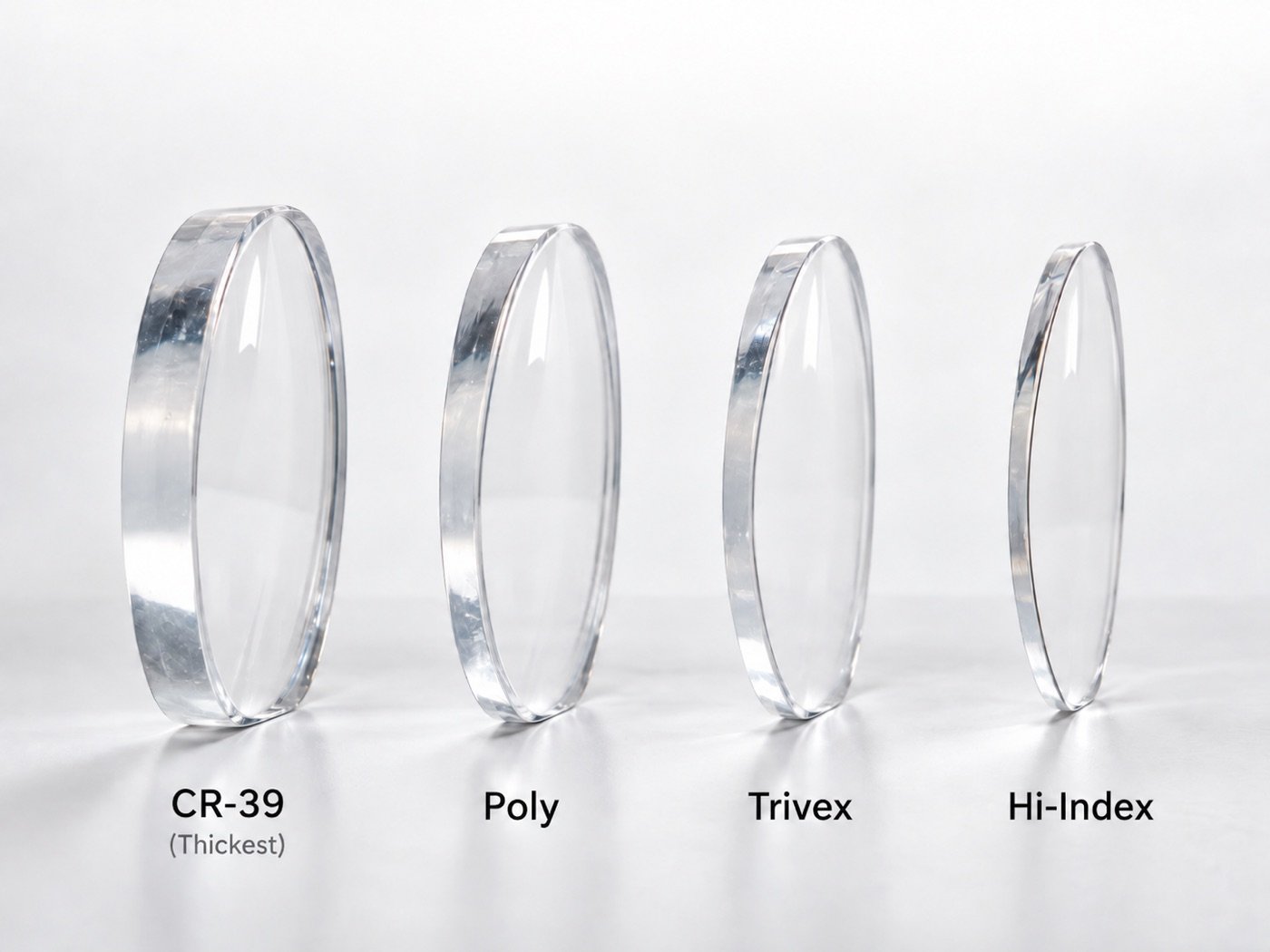
Every material bends light by a different amount. The higher that number — the index — the less glass is needed to do the same job, so the edge comes out thinner. That is the entire appeal of high-index, and it only matters once your prescription is strong enough for edge thickness to show.
The counterweight is a measure called the Abbe value, which describes how much a material splits light into color fringes at the edge of your vision. Higher index almost always means a lower Abbe value. That is the trade nobody mentions at the counter.
- Thickness is driven by your prescription and frame size, not by material alone
- Impact resistance is a safety requirement for children, sports and rimless mounts
- Edge sharpness quietly drops as index climbs
| Material | Index | Impact | UV | Best for |
|---|---|---|---|---|
| CR-39 plastic | 1.50 | Standard | Needs a UV treatment | Low prescriptions where thickness is not an issue. The sharpest optics of the four and the least expensive. |
| Polycarbonate | 1.59 | High | Built in | Children, sports, safety eyewear and rimless frames. Thinner and far tougher than CR-39, with softer edge optics. |
| Trivex | 1.53 | High | Built in | The same toughness as polycarbonate with noticeably better optics, and lighter on the nose. Costs more. |
| High-index 1.67 / 1.74 | 1.67–1.74 | Standard | Built in | Strong prescriptions, roughly ±4.00 and up, where a thinner edge is worth a small loss of edge sharpness. |
The coating that earns its cost
Of everything you will be offered at the counter, this is the one we recommend on almost any prescription.
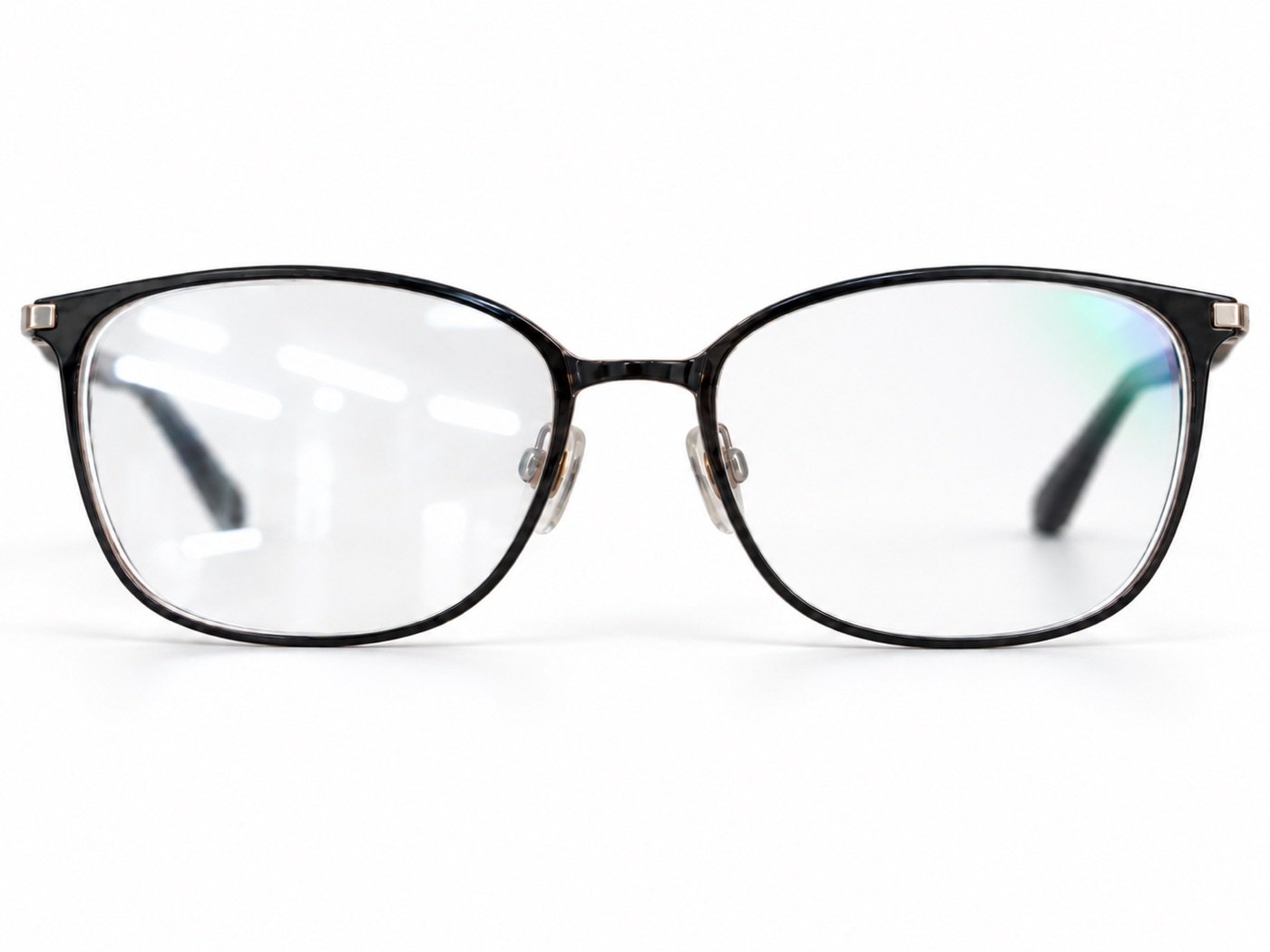
Left lens untreated, right lens anti-reflective. Same frame, same light.
Anti-reflective coating
An untreated lens reflects roughly eight per cent of the light hitting it straight back out. That shows up as halos around headlights at night, glare bouncing off screens, and a white flash across your eyes in every photograph.
An anti-reflective coating cancels most of it. More light reaches your eye, which is the part that matters after dark, and people can see your eyes rather than your lenses.
- Night driving — the clearest benefit, and the one patients notice first
- Screen work — removes the reflected room behind you from the lens
- High-index lenses — reflect more by nature, so the coating matters most here
- Photographs — no white glare across your eyes
Our take: worth it on nearly every prescription, and close to essential on high-index.
Protecting your eyes outdoors
Southern California gives us a great deal of sun, and UV exposure accumulates across a lifetime — it contributes to cataracts, to growths on the surface of the eye, and to skin cancers on the eyelids.
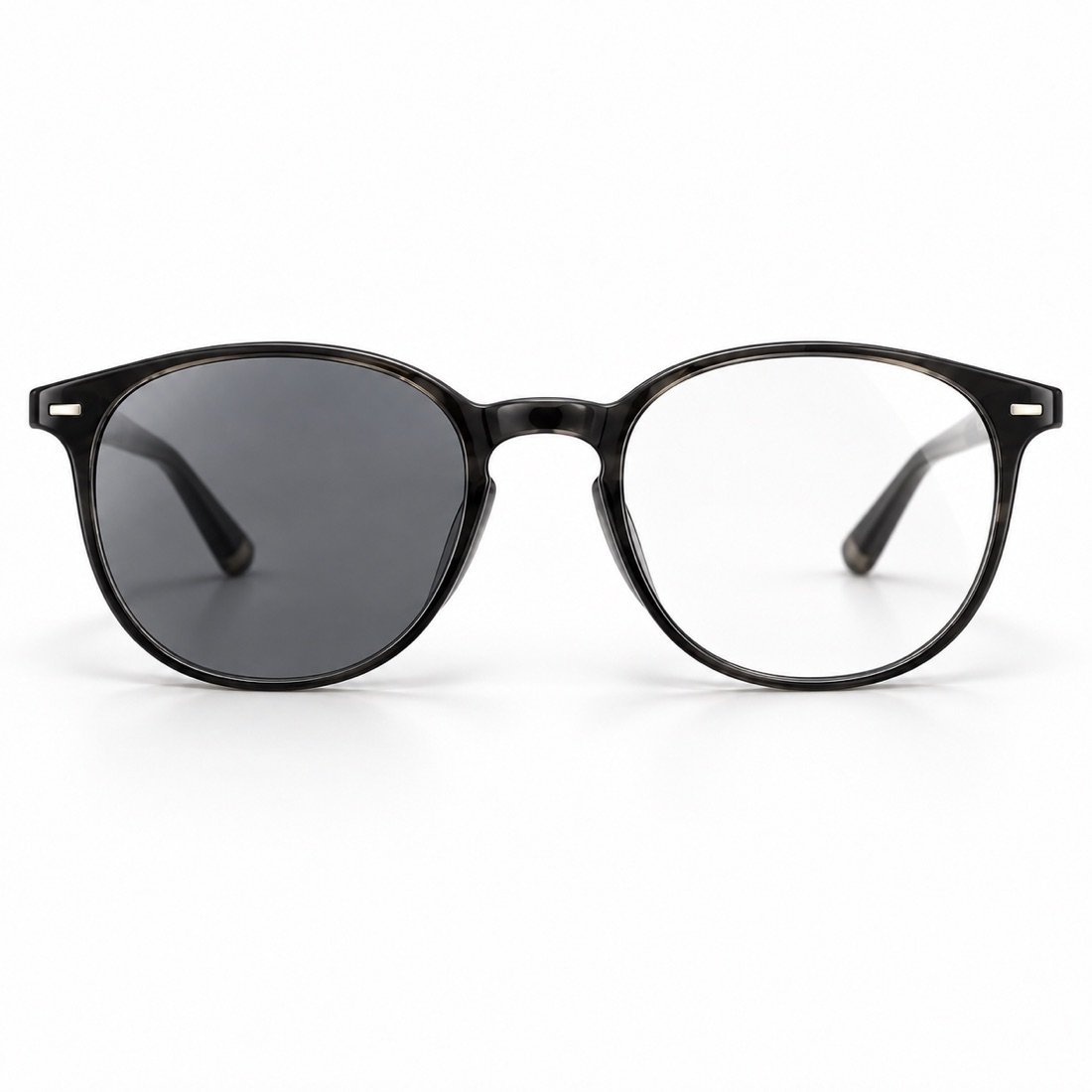
Photochromic (Transitions)
Clear indoors, darkening within about a minute outdoors and taking rather longer to clear again. One pair covers both jobs, which is the whole appeal.
Know this: a windscreen blocks most UV, so standard photochromics stay light while you drive. Ask us about the in-car versions.
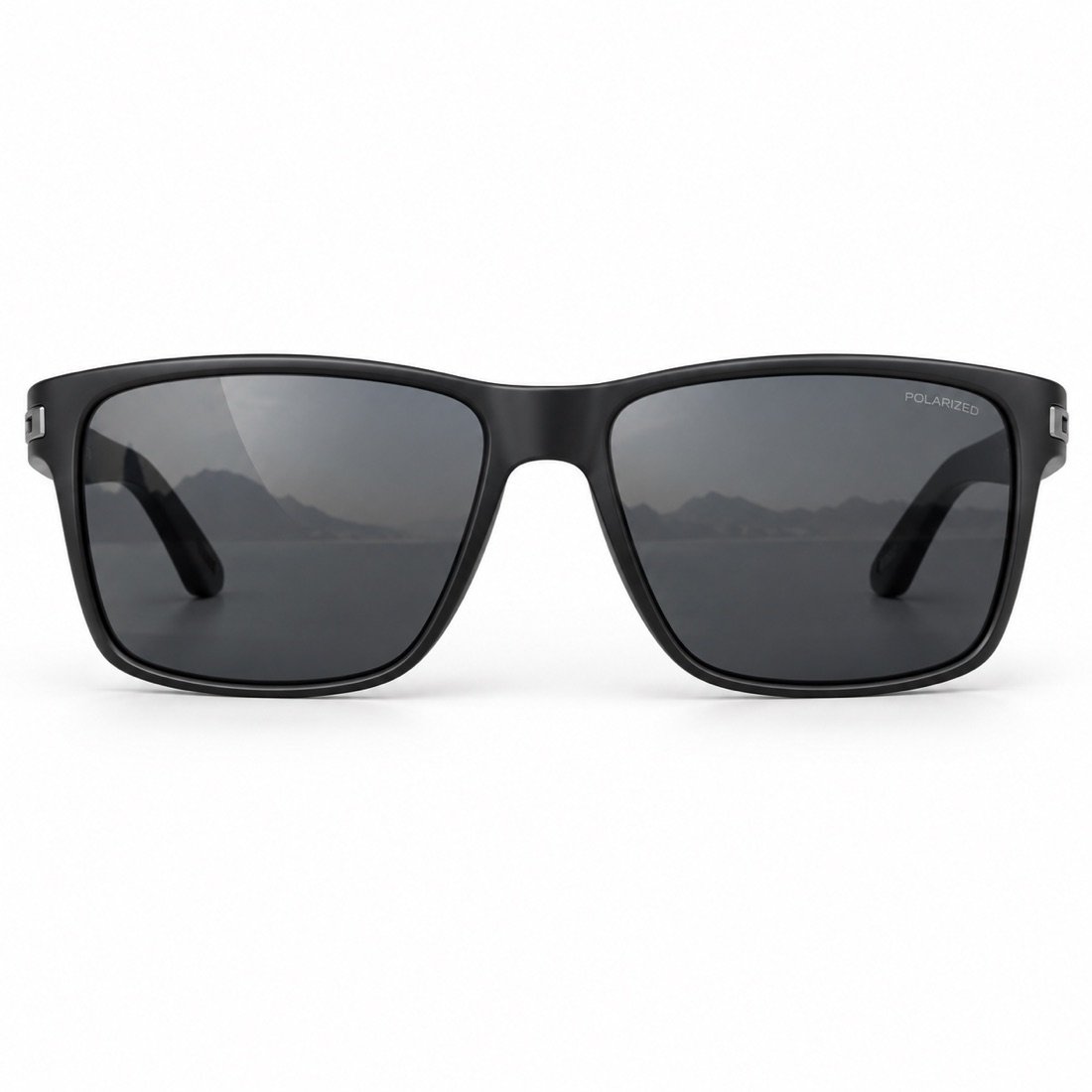
Polarized sunglasses
A filter that cancels the horizontal glare reflecting off roads, water and car bonnets — a different problem from overall brightness, and the reason polarized lenses feel so much calmer outdoors.
Best for driving, the water and the beach. Note they can make some dashboard and phone screens hard to read.
UV protection is the part that is not optional
Whatever else you choose, the lens should block 100% of UVA and UVB — usually labeled UV400. Polycarbonate, Trivex and high-index all have it built in. CR-39 needs a UV treatment added, which costs little and should simply be done.
A dark lens without UV protection is worse than no sunglasses at all. The darkness makes your pupils open wider, which lets more unfiltered ultraviolet into the eye. It is the one place where cheap sunglasses actively do harm.
How we actually decide
You will not be handed a price list and left to guess. Freddy works through it with your prescription in front of you.
01
Start from your prescription
The numbers decide most of it. A strong prescription makes material matter; a mild one makes it nearly irrelevant.
02
Then how you spend your day
Hours at a monitor, long drives, outdoor work and close handwork each push the answer in a different direction.
03
Then the frame you picked
Frame size and shape change edge thickness as much as material does, and rimless mounts demand a tough lens.
04
Then what it costs
We will tell you which upgrades change what you see and which ones will not, so you can spend where it counts.
Already have a prescription from somewhere else?
Bring it in. You are free to have your lenses made wherever you like, and we are happy to fill a prescription written by another optometrist — just make sure it is still in date. Membership plan members get frames from $89 and single-vision lenses at $99.
Questions about lenses
Anti-reflective is worth paying for on almost any prescription and is included on many of our lens packages — we will tell you which. UV protection is already built into polycarbonate and Trivex at no cost. Everything else is optional, and we will say plainly when we think you do not need it.
Most people settle within a week or two. The trick is to wear them full time during that period rather than switching back to your old pair, because swapping resets the adjustment. If they still feel wrong after two weeks, come back — something is off and it can usually be fixed.
Sometimes, and we will tell you when they are not. High-index genuinely helps a strong prescription and does nothing for a weak one. Trivex is worth it for a child or a rimless frame. A premium progressive design earns its cost if you spend your day at a screen. Beyond that, the returns flatten out fast.
Usually, yes, and it is often the cheaper option. Bring the frame in and Freddy will check whether it is still sound enough to survive being re-edged — older plastic can become brittle, and rimless mounts are less forgiving.
Only partly. Standard photochromic lenses darken in response to UV, and a car windscreen blocks most UV, so they stay much lighter behind the wheel than they do outdoors. If glare while driving is your main problem, polarized sunglasses are the better answer. There are in-car photochromic variants, and we can order those.
A dark tint lowers overall brightness. Polarization specifically cancels the horizontal glare that bounces off a road, a bonnet or water, which is a different problem. A cheap dark lens can leave you squinting at glare it does nothing about — and if it lacks UV protection, dark lenses are worse than none, because your pupils open wider behind them.
It depends on your prescription and your frame. A stronger prescription and a larger frame both mean a thicker edge. High-index materials help, and so does choosing a smaller, rounder frame — often more than the material does. Freddy will show you the trade-off with your actual numbers before you commit.
Let us get your lenses right
Book an exam and we will go through the options with your prescription in hand. No pressure, and no upgrade we cannot justify.