Contact lens fittings
The difference between contact lenses that feel effortless and ones you want to remove by the end of the day often comes down to the fit. We personalize each fitting for your eyes, including astigmatism, multifocals, and more complex prescriptions.
Written and medically reviewed by Dr. Loi Thanh Mai, O.D.
Doctor of Optometry · Certified in the treatment and management of ocular disease · Last reviewed September 2026
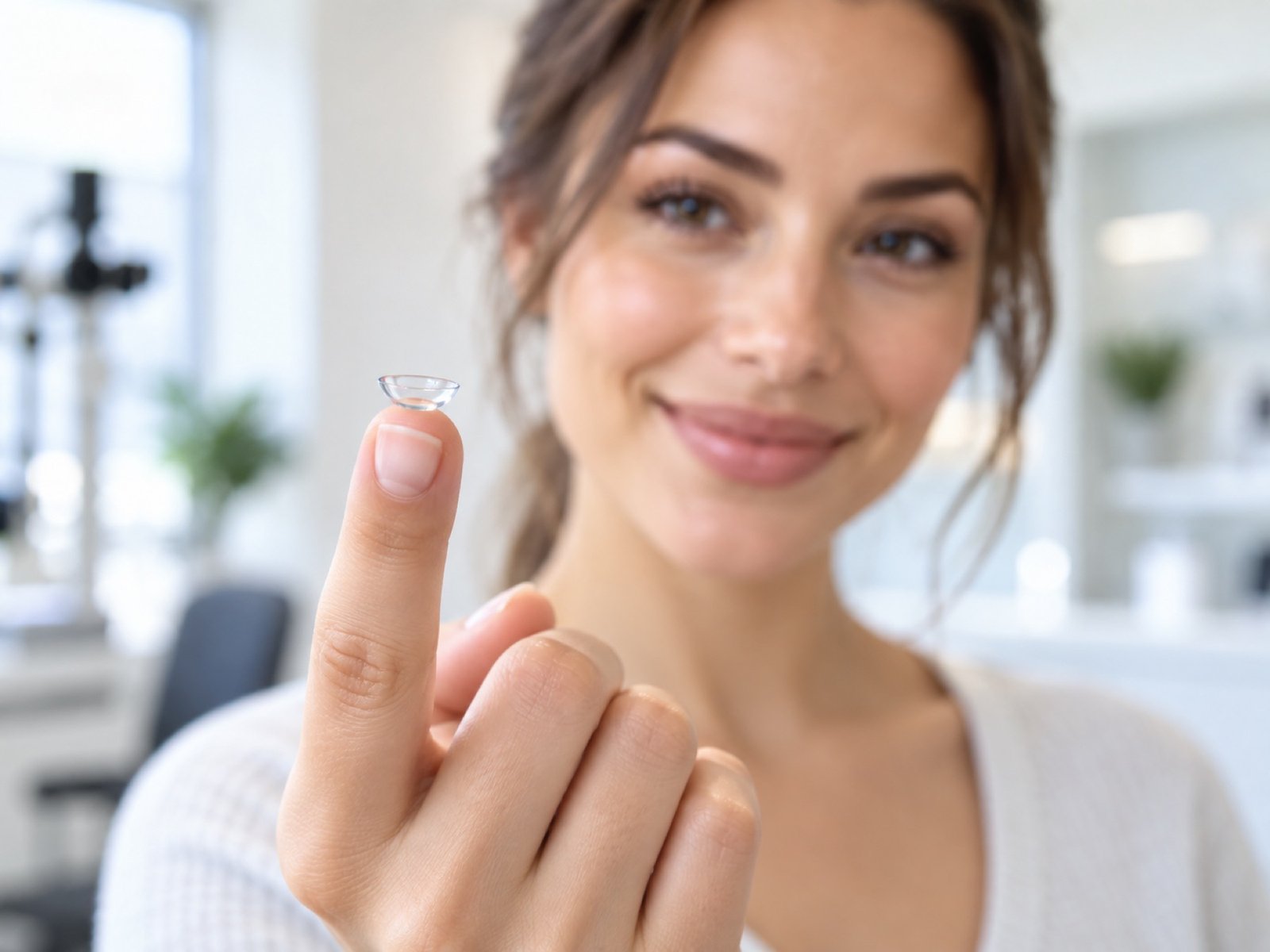
A contact lens fit tailored to your eyes
Contact lenses sit directly on the surface of the eye, so comfort and clear vision depend on more than prescription alone. We evaluate the shape of your cornea, tear film, lens material, and how the lens performs during real-world wear.
- Corneal measurements to help select the appropriate lens curvature and fit
- Tear film evaluation to identify dryness that may affect comfort and wear time
- Lens material selection based on oxygen transmission, prescription, and daily wear needs
- Trial lenses so you can evaluate comfort and vision outside the exam room
- Insertion and removal training for new wearers, at a comfortable pace
- Follow-up evaluation to confirm lens fit, vision, and corneal health before finalizing the prescription
Solutions for simple—and complex—prescriptions
Contact lenses are not one-size-fits-all. We fit a range of lens designs for everyday wear, astigmatism, presbyopia, and more complex corneal conditions.
Daily Disposable Lenses
A fresh pair every day with no cleaning or storage. An excellent option for convenience, comfort, and patients who prefer the simplicity of single-use lenses.
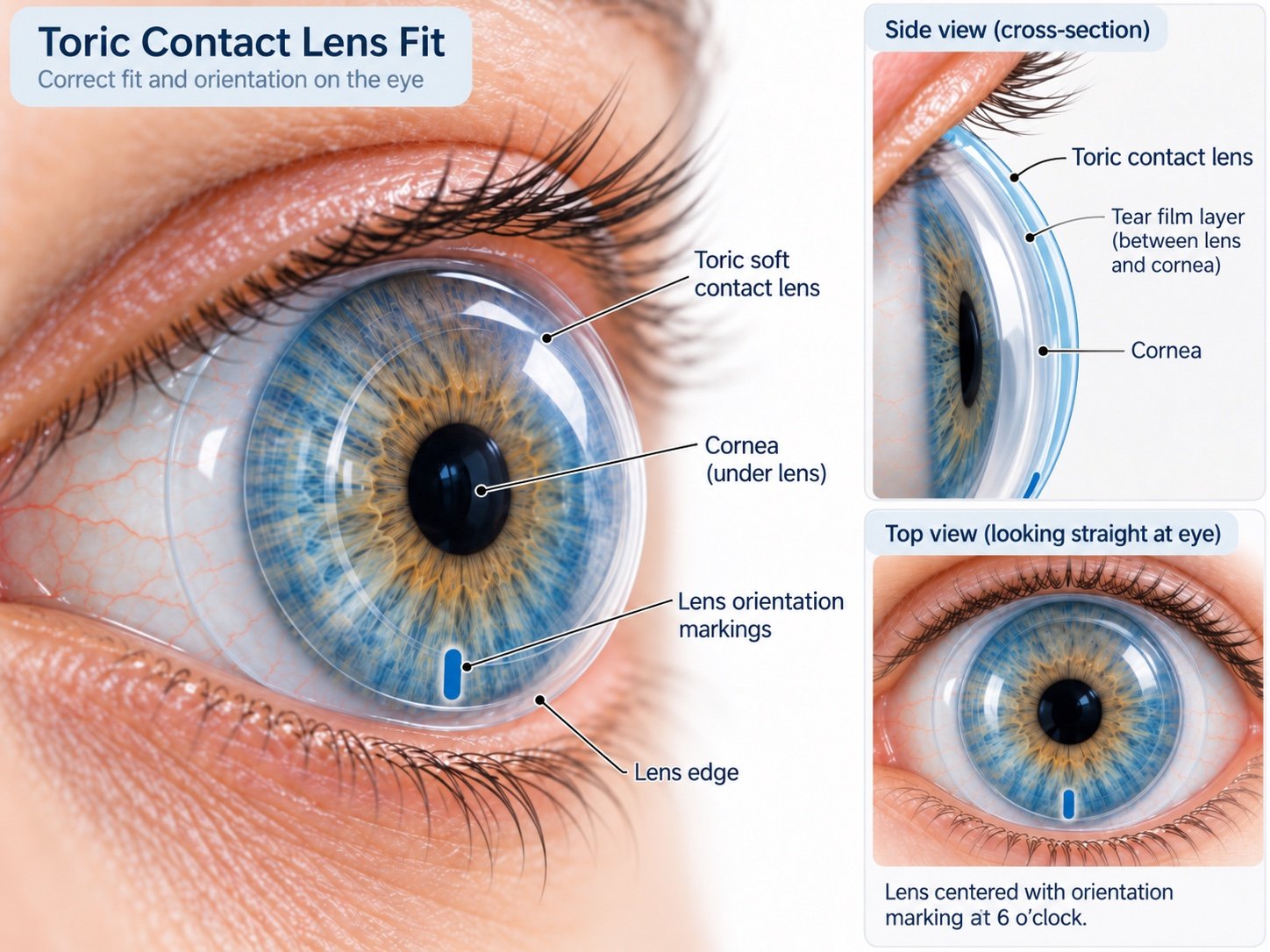
Toric Lenses for Astigmatism
Designed to stay stable on the eye for clearer, more consistent vision. Available in daily and reusable options depending on your prescription and lifestyle.
Multifocal Contact Lenses
Designed to provide both distance and near vision in one lens. We fine-tune the fit and prescription to balance clarity across the range you use most.
Scleral Lenses for Irregular Corneas
Custom rigid lenses that vault over the cornea and hold a fluid reservoir against the eye. They can be especially helpful for keratoconus, corneal irregularity, scarring, and certain cases of severe dry eye.
Questions patients ask
A glasses lens sits twelve millimeters in front of your eye; a contact lens sits directly on it. That changes the effective power and means the lens must match the curvature of your cornea.
Worth revisiting. Astigmatism, presbyopia and mild dry eye all used to rule people out, and modern lens designs handle all three as a matter of routine.
Yes. Toric lenses are weighted to stay rotationally stable. The fitting matters more than with a standard lens, because a toric that rotates gives vision that drifts in and out of focus.
Multifocal contact lenses give you distance and near through the same lens. They take a couple of weeks of adaptation and often need one adjustment at the follow-up.
It depends on lens type and how many boxes you need. Membership members get 20% off the fitting and 5–10% off supplies with free shipping.
Only in lenses specifically approved for it, and even then it carries meaningfully higher risk of corneal ulcers.
Book a contact lens fitting
Including if you have been told before that your eyes were too difficult to fit.