Children’s eye exams
Children often don’t realize their vision is different because they have nothing to compare it to. Instead of complaining, they adapt—so the first signs may show up in their behavior, schoolwork, or daily activities.
Written and medically reviewed by Dr. Loi Thanh Mai, O.D.
Doctor of Optometry · Certified in the treatment and management of ocular disease · Last reviewed September 2026
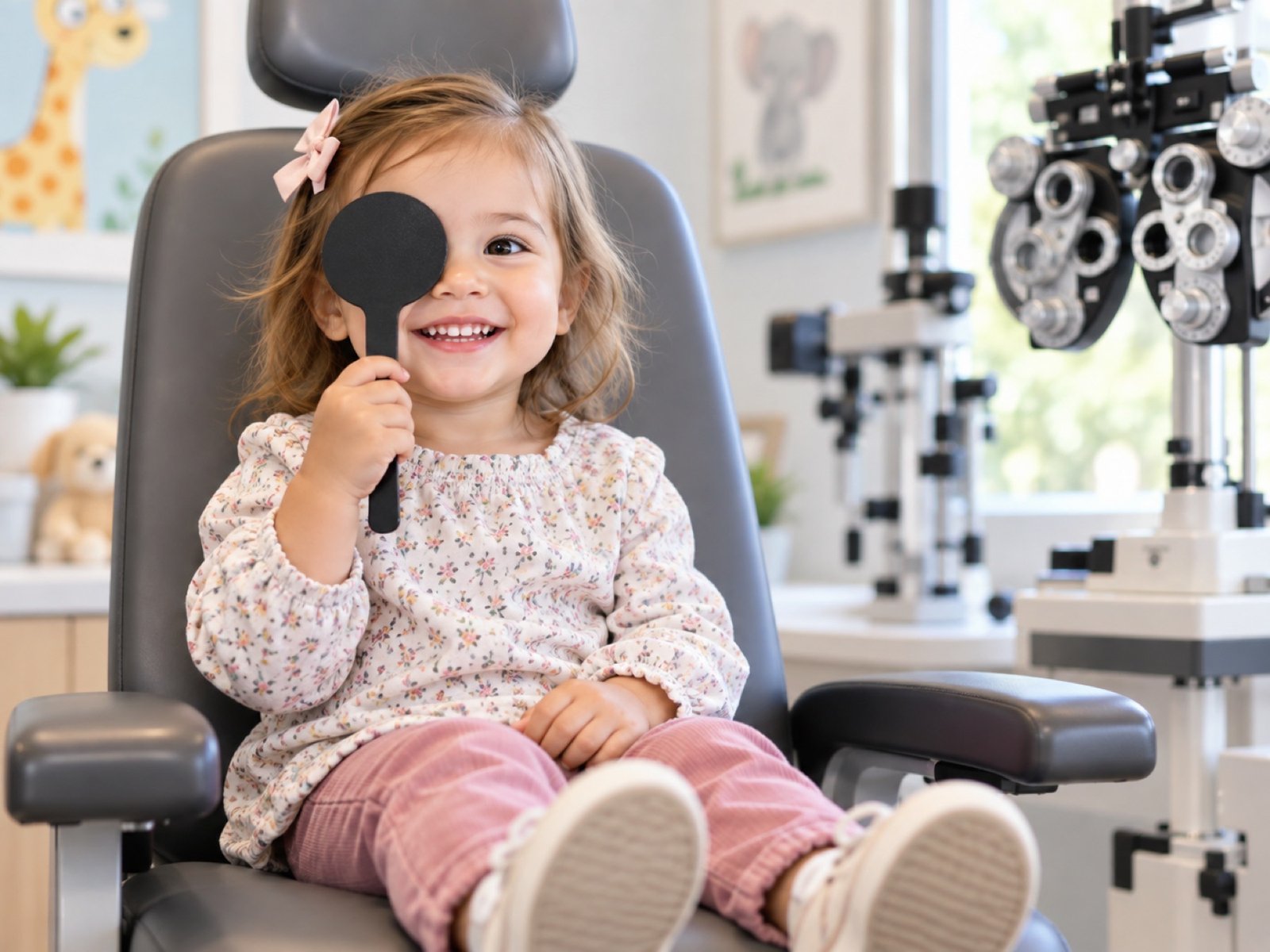
Children rarely say “I can’t see”
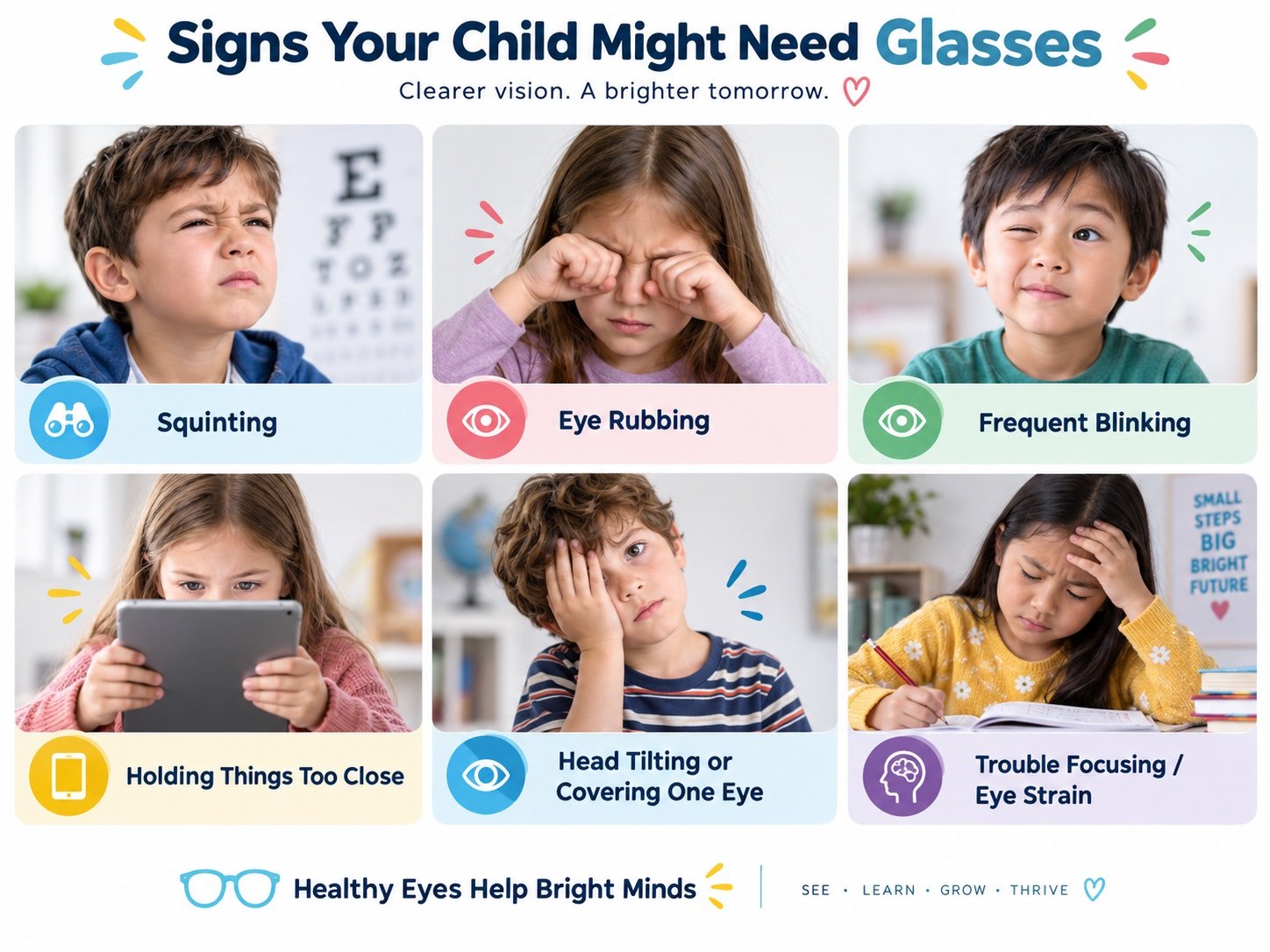
They squint, they sit closer, they lose their place on the page, or they simply decide that reading is not for them. These are the behaviors parents usually notice first.
- Squinting, or tilting and turning the head to look at something
- Sitting very close to the TV or holding devices close
- Covering or closing one eye when concentrating
- Losing their place, skipping lines, or tracking with a finger
- Avoiding reading and close work, or a short attention span for it
- Headaches or eye rubbing after a school day
- An eye that drifts inward or outward, particularly when tired
Why a school screening is not an eye exam
Screenings are a useful filter. They are not a diagnosis, and a great many children pass one while struggling every day in class.
A school vision screening
- Measures distance acuity only
- One eye chart, twenty feet away
- No assessment of near vision
- No test of focusing stamina or eye teaming
- No examination of eye health
- Passing it rules out very little
A children's exam here
- Distance and near acuity measured separately
- Eye teaming and tracking across a line of text
- Focusing stamina — can they hold it for a chapter
- Amblyopia and eye turn screening, the age-critical findings
- Full eye health examination
- Objective testing for children too young to answer
Eye exams at the stages that matter most
Children’s vision develops quickly, and some problems are easiest to address when found early. The American Optometric Association recommends comprehensive eye exams at key milestones throughout childhood.
6–12 months
A first comprehensive eye exam can assess early visual development, eye alignment, focusing, and signs of conditions that may interfere with normal vision development.
Ages 3–5
At least one comprehensive exam during the preschool years helps identify refractive errors, amblyopia, eye turns, and other problems while the visual system is still developing.
Before first grade
A comprehensive exam before entering first grade helps make sure a child has the visual skills needed for reading, learning, and classroom activities.
Every year after that
The AOA recommends annual comprehensive eye exams for school-age children because vision and prescriptions can change as they grow. Children with symptoms or additional risk factors may need to be seen more often.
A child’s eye exam can reveal more than blurry vision
Children do not always know when something is wrong with their vision. A comprehensive eye exam can uncover problems with focusing, eye alignment, visual development, and eye health before they begin interfering with school or daily life.
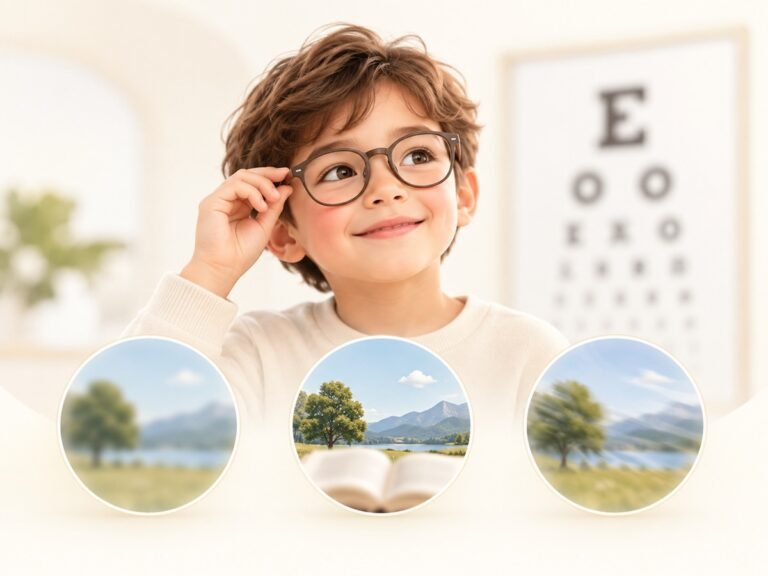
Nearsightedness, farsightedness & astigmatism
Refractive errors can make distance or near vision unclear and may change as a child grows.
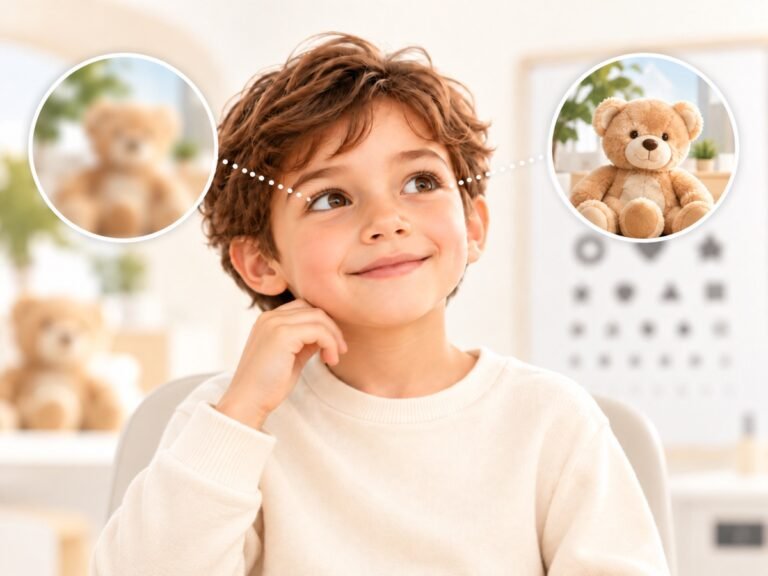
Amblyopia (lazy eye)
When one eye does not develop normal vision, the brain may begin relying more heavily on the stronger eye. Early detection is especially important.
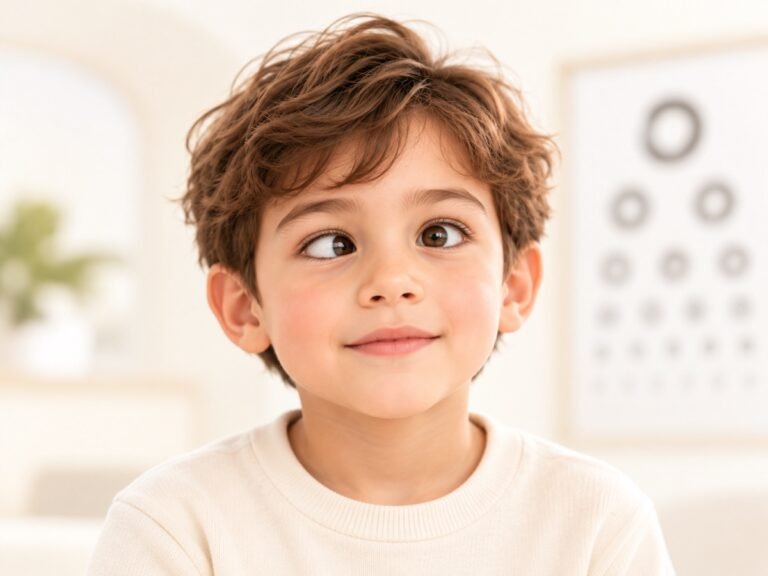
Strabismus (eye turn)
Eyes that do not consistently work together can affect depth perception and normal visual development.
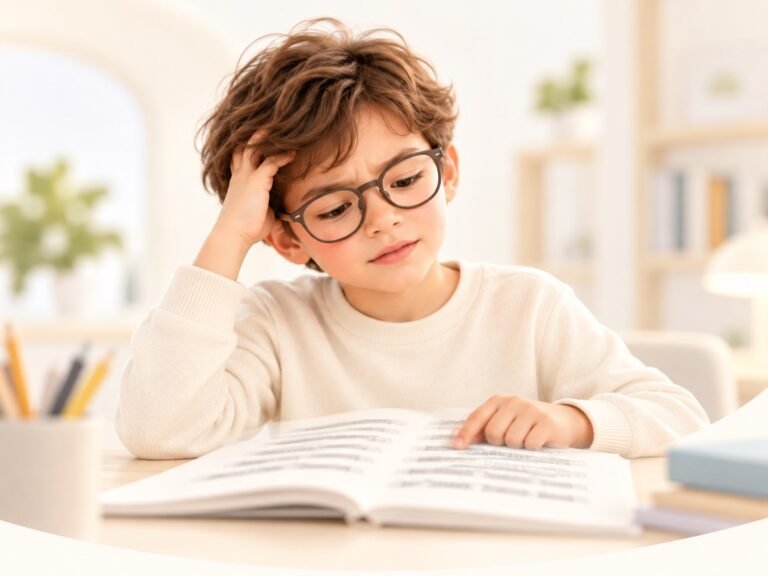
Focusing & eye-teaming problems
Some children can see the eye chart clearly but still struggle to focus up close or use both eyes comfortably for reading and schoolwork.
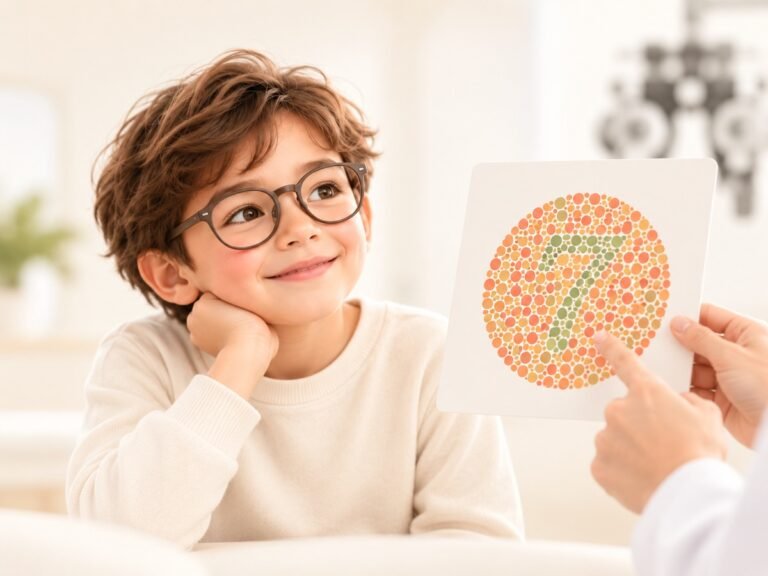
Color vision differences
Color vision testing can identify inherited color deficiencies that may affect how a child interprets certain school materials.
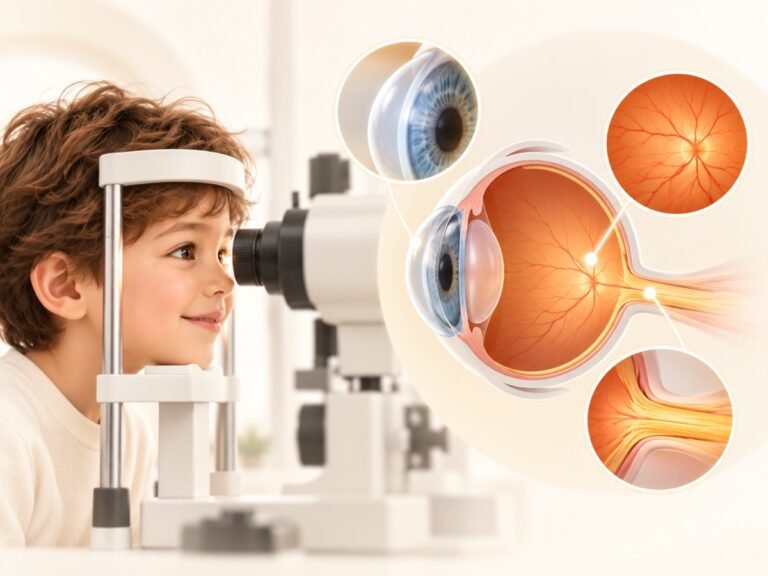
Eye health abnormalities
An exam also evaluates the front and back of the eye for less common but important findings involving the cornea, retina, optic nerve, and other structures.
Many of these conditions can be present even when a child says they see “fine.”
Questions patients ask
At around six months, again at age three, once before kindergarten, and then every school year. Come sooner if you have noticed squinting, an eye drifting, or reluctance to read.
No, and this is the most common misunderstanding we deal with. A screening measures distance acuity. It does not assess focusing stamina, eye teaming, or near vision.
With pictures, shapes, matching games, and objective tests that measure the eye’s response directly and need no answer from the child at all.
Amblyopia is reduced vision in one eye because the brain learned to favour the other. Treatment works well in young children and becomes much harder after about age seven or eight.
Often, yes. Children have strong focusing systems that can mask a significant farsighted prescription. Drops relax that focusing so the true prescription is measurable.
Yes, along with VSP and EyeMed. Bring the card and we will verify the coverage before the visit.
Book your child’s eye exam
Appointments are unhurried, and we are used to children who would rather be somewhere else.