Dry eye diagnosis & treatment
Dry eye can have several underlying causes, and each may require a different approach. The first step is identifying what is driving your symptoms so treatment can be tailored appropriately.
Written and medically reviewed by Dr. Loi Thanh Mai, O.D.
Doctor of Optometry · Certified in the treatment and management of ocular disease · Last reviewed September 2026

Dry eye doesn’t always feel dry
Dry eye often shows up as burning, grittiness, tired eyes, fluctuating vision, or even excessive watering. The symptoms can seem contradictory, which is why identifying the underlying cause matters.
- A gritty or sandy sensation, as though something is caught under the lid
- Burning or stinging that builds through the day
- Watering and streaming eyes, especially outdoors or in wind
- Vision that blurs, then clears for a second or two when you blink
- Heavy, tired eyes by mid-afternoon or after a screen session
- Redness, or contact lenses that became unwearable
- Crusting or stickiness on the lashes in the morning
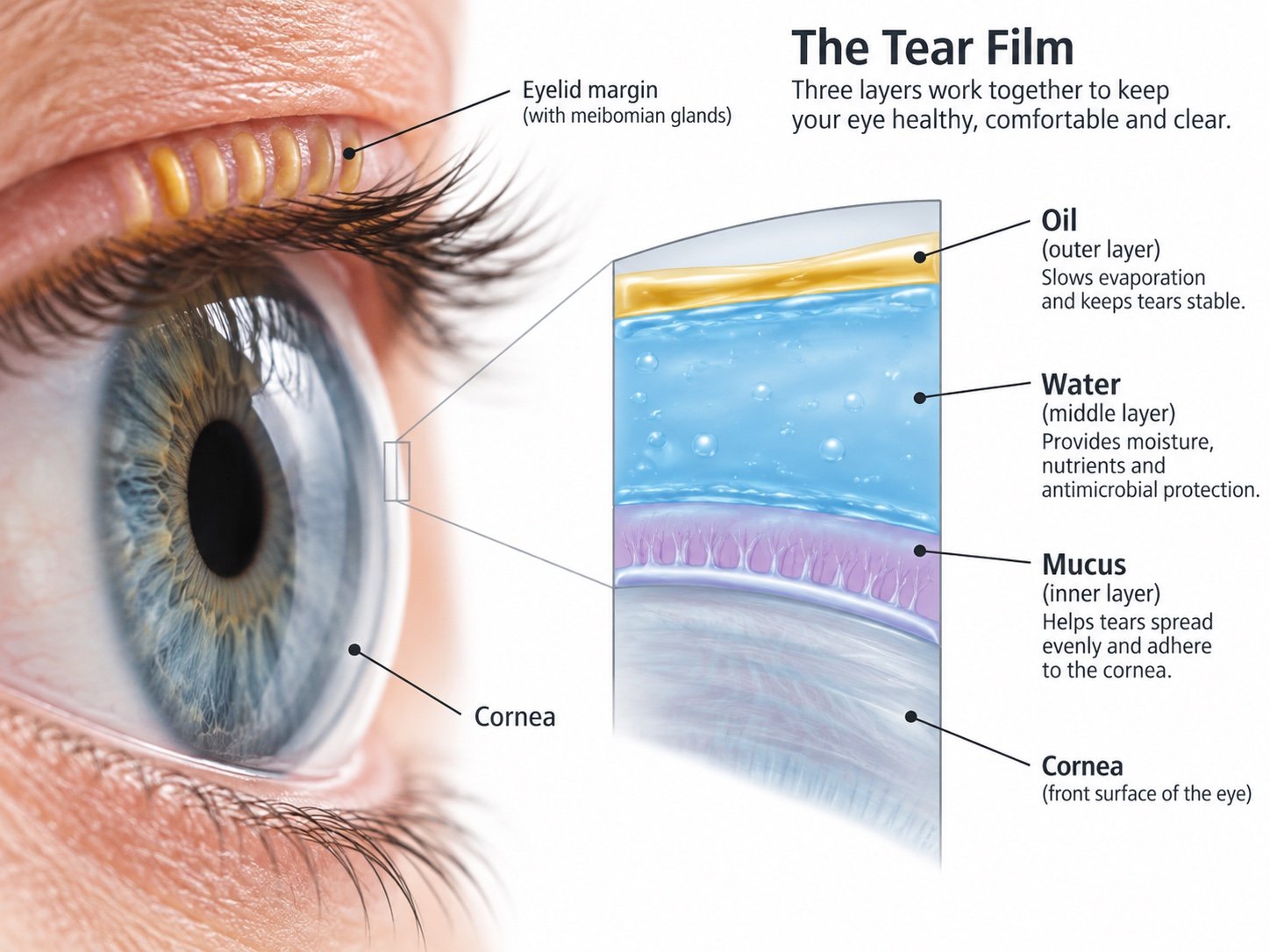
Similar symptoms can come from very different causes
Burning, watering, grittiness, and fluctuating vision can all be signs of dry eye—but the reason behind those symptoms is not always the same. Identifying the underlying mechanism is what allows treatment to be more precise.
Evaporative Dry Eye
When the eyelid oil glands are not functioning well, tears evaporate too quickly. This is commonly associated with meibomian gland dysfunction and often requires treatment directed at the glands, not just artificial tears.
Aqueous-Deficient Dry Eye
In this form, the eyes do not produce enough of the watery layer of the tear film. It can be associated with age, certain medications, and systemic conditions, and may require a different treatment approach.
Environmental & Lifestyle Dry Eye
Screens, reduced blinking, air conditioning, ceiling fans, contact lenses, and other environmental factors can destabilize the tear film. In these cases, improving habits and reducing exposure may be an important part of treatment.
Questions patients ask
Because watering is a reflex, not a supply. When the eye surface dries out and becomes irritated, it triggers an emergency flood of watery tears that lack the oily layer keeping them on the eye.
Either you are using a redness-reliever, which makes dryness worse over time, or your dry eye is evaporative — the oil glands in your lids are blocked — and no amount of watery drops will fix a blocked gland.
Partly. Blink rate drops by roughly half during concentrated screen work, and many of the blinks that do happen are incomplete.
For most people it is controlled rather than cured. Controlled properly, though, it stops dictating your day and you stop reaching for drops every hour.
Very likely. Dry eye is the single most common reason people abandon contact lenses. Treating the surface first usually gets those patients wearing lenses comfortably again.
Yes. Untreated, persistent dryness can inflame and scar the corneal surface.
Stop putting up with it
Book a dry eye evaluation and find out which mechanism is actually behind it.